
Jev Codebase Search
Screens and ranks source files by a plain-language implementation goal.
Added to Jevfast
Screens and ranks source files by a plain-language implementation goal.
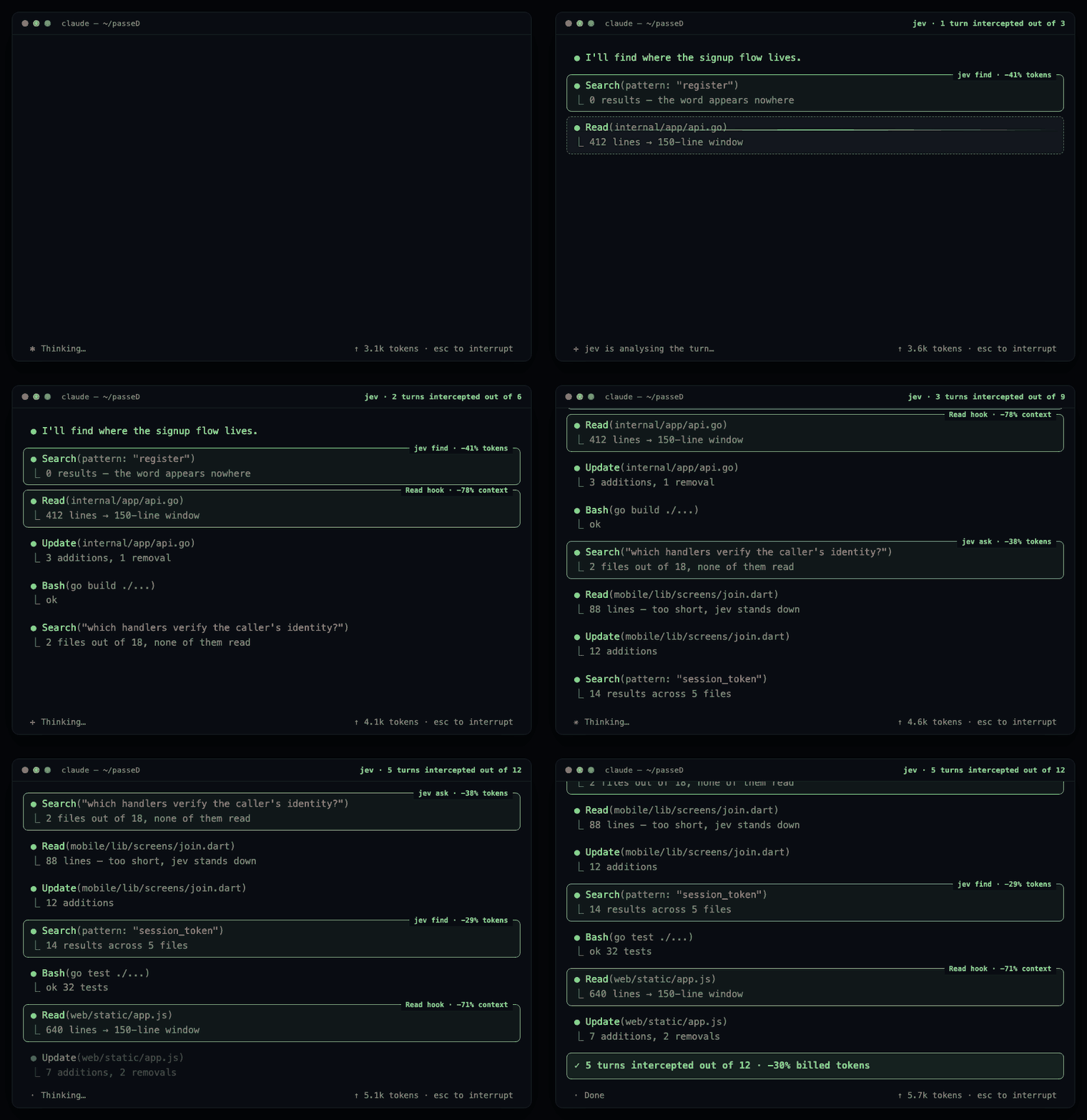
The `jev find` command asks Jev whether each source file actually performs a user-described goal. It sends the goal and one file at a time, first as a declaration skeleton and then, for leading candidates, as full content. Jev's Noul answer ranks files; optional line location helps point to the relevant code. The `jev hook read` path can also use a located line to narrow a large Read request, but passes the read through when its safety checks do not support narrowing. These are source-defined request and control paths, not recorded output examples.
Does this file's own code carry out the described goal? A match defines the relevant handler, endpoint, form, screen, query, or logic; supporting files and files that only call or link to it do not match.
One request contains the user's goal and one file's path and declaration skeleton. Verification requests use that file's path and full content. Files are sent individually, so the example shows a representative candidate rather than a captured file or result.
`jev find` takes a plain-language goal and one or more paths, defaulting to the current directory. Its default screen asks Jev about each file separately using the file path and declaration skeleton.
The command sorts screening answers, re-scores a configurable leading set against full file content, sorts again, and applies the minimum score and result limit.
For selected matches, an optional locate pass can add a source line. The command prints the retained files, their scores, and any located line.
The read hook uses the latest user message as its goal. It passes through when the file is below the line floor, exceeds the single-request size, has no usable goal, or the location is missing or under the confidence floor. When it narrows, it emits a broad offset and limit and tells the agent how to read other parts.
The search separates cheap screening from verification: every file is first judged from its declarations, then the leading candidates are checked against their full source before sorting again. A separate hook turns a confident location into a broad Read window and otherwise leaves the original read untouched. This connects relevance judgments to a concrete code-navigation action while limiting the cost of a false match.