Jev Reranker
Filter and rerank retrieval candidates using typed Jev relevance judgments.
Runs on demand
Added
Explore Jev projects, including those that run in realtime or nearly.
Filter and rerank retrieval candidates using typed Jev relevance judgments.
 New
Classify Gmail messages with custom labels, confidence gates and a metadata-first Jev decision.
Jev chooses text, tables or interactive visuals before a chat model creates the answer.
 New
Optional Jev checks filter and rerank memory cards for an agent workspace.
 New
Jev checks codebase questions and retrieved passages before memory evidence is used.
 New
Checks new events against stored facts and records whether memories remain valid.
A browser extension combines Jev writing-style judgments with local rules to flag likely AI prose.
A browser extension uses typed decisions to choose actions from the current page.
Screens and ranks source files by a plain-language implementation goal.
 New
Jev ranks Apple documentation and WWDC transcript matches after hybrid retrieval.
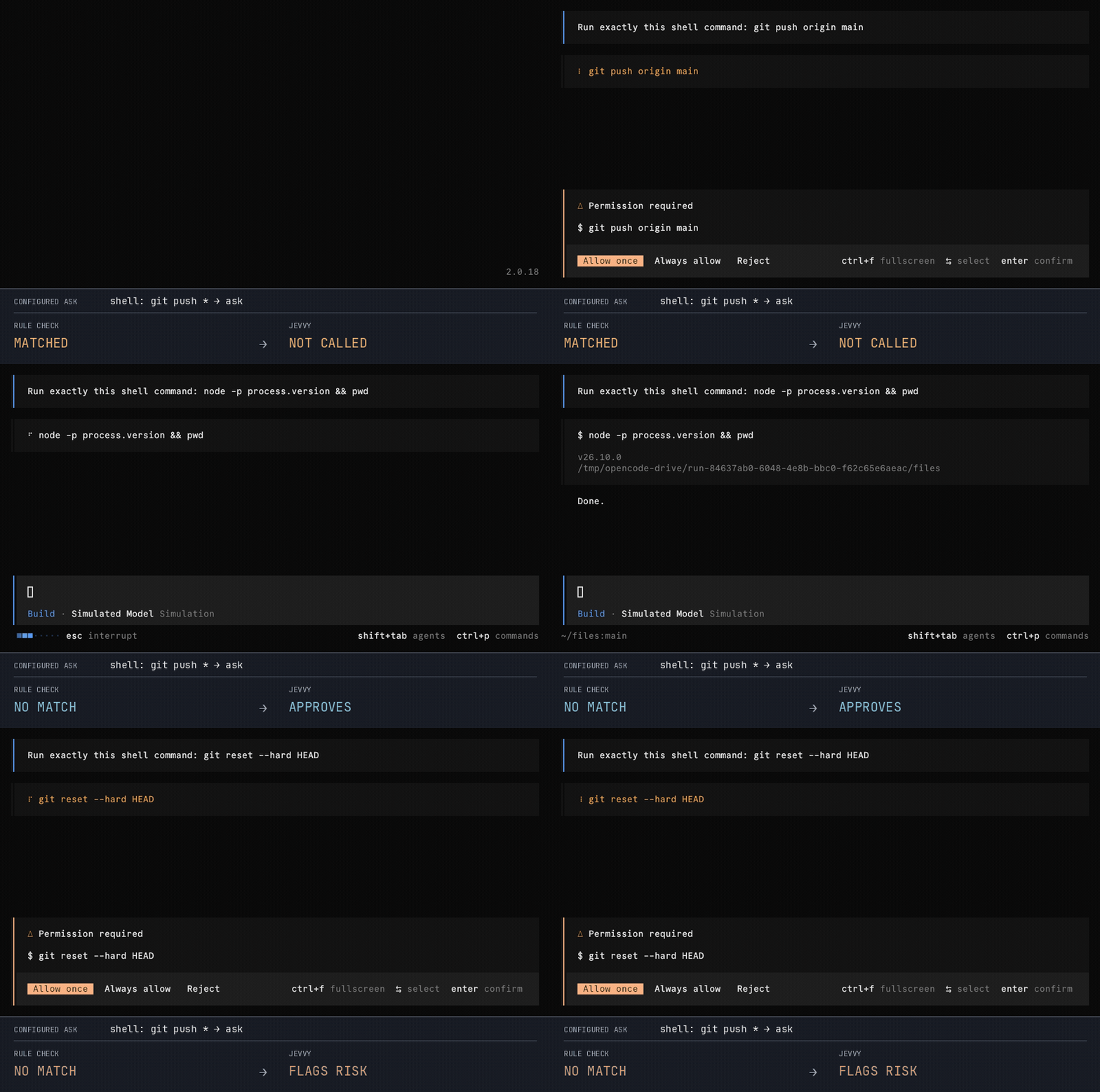
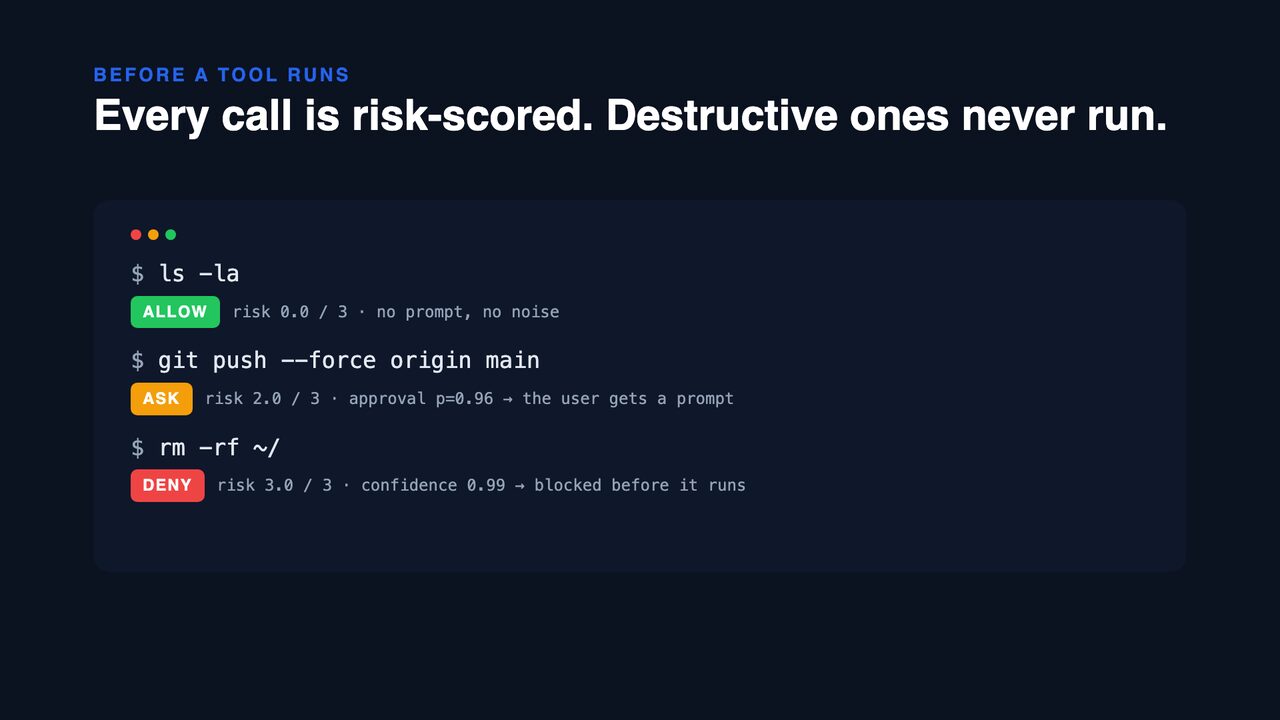
Jev scores prompt injection and proposed shell commands before coding-agent hooks allow them.
Video unavailable. Open the source below.
NewPermission-aware document-tree retrieval with Jev branch routing and passage scoring.
 New
An optional Jev tool gives a local document agent typed classification, routing, and scoring decisions while the caller keeps thresholds and execution policy.
The DuckDB extension passes each ticket row's body text and constant criteria to jev_ask.
Tasksource publishes rows with state, question, kind, options, and target.
For a semantic tool-action check, the plugin sends a redacted state containing the current task, applicable rules, and proposed action.
Each isEven(number) call sends the number as state and asks a Choice question keyed category with true and false criteria.
 New
Jev classifies the operator’s text into query, diagnosis, action, or chat.
 New
The controller first asks Jev to select a manipulation intent from the task and observed geometry facts.
For each T-Rex game decision, a deterministic physics planner creates a text state and labels jump, duck, and run as safe or unsafe under the model’s answer timing.
 New
For a message and optional recent context, Jev receives two questions in one request: intent Choice and direct-reply-risk Score.
 New
When the TypeSafe classifier is selected, Sharp sends a Noul question asking whether to hide each eligible X post under the reader’s plain-language filter instruction.
 New
For each article, the client sends a state containing the title and up to 4,000 characters of body.
The query analyzer sends the user's log query and known service names to Jev.
 New
For each new message, Jev sees the latest message, recent conversation, available recent results, and any pending question or confirmation.
Video unavailable. Open the source below.
NewThe demo sends measured browser state, the goal, and recent action history to a typed Choice question for the next browser action.
Jev reads the assistant instructions and recent conversation turns, then answers a typed tool Choice and a Noul question about whether a tool call is needed.
pijev sends the same ticket state with several typed Choice questions that vary only the order of the same support-team criteria.
A CLI for testing authored Jev questions against labeled examples, selecting thresholds, measuring calibration, and checking changes against held-out data.
A benchmark harness that compares Jev and DeepSeek on comment-labeling tasks and records per-item outcomes, usage, cost, and latency.
An SRE agent evaluation framework with optional Jev decision support for reviewing diagnostic plans and submitted evidence.
 New
A research and trading workbench with a Jev-powered futures monitoring and proposal-evaluation path connected to a simulated contest account.
 New
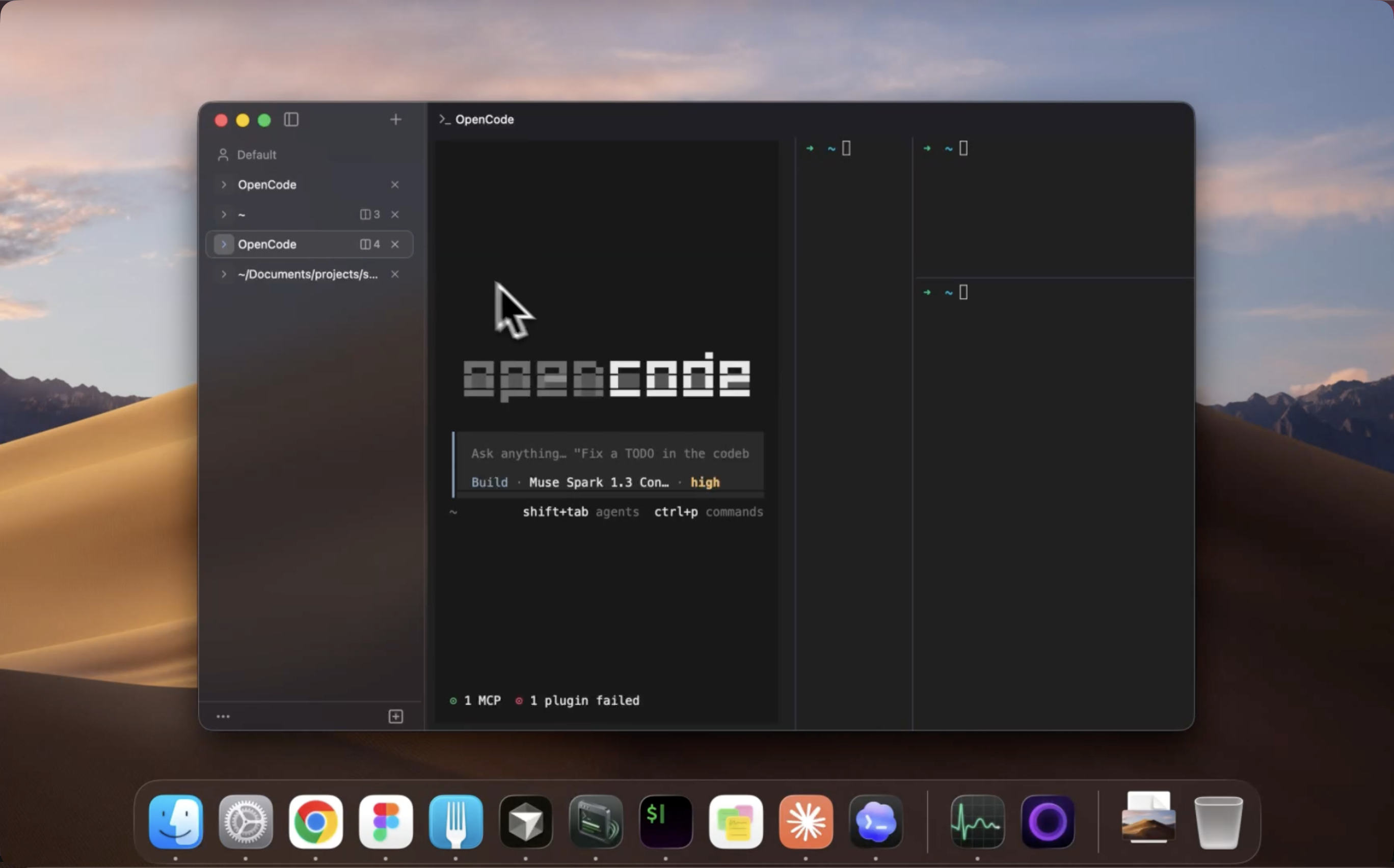
A terminal app whose command palette combines local fuzzy matching with optional Jev ranking of commands, tabs, and sessions for plain-language searches.
 New
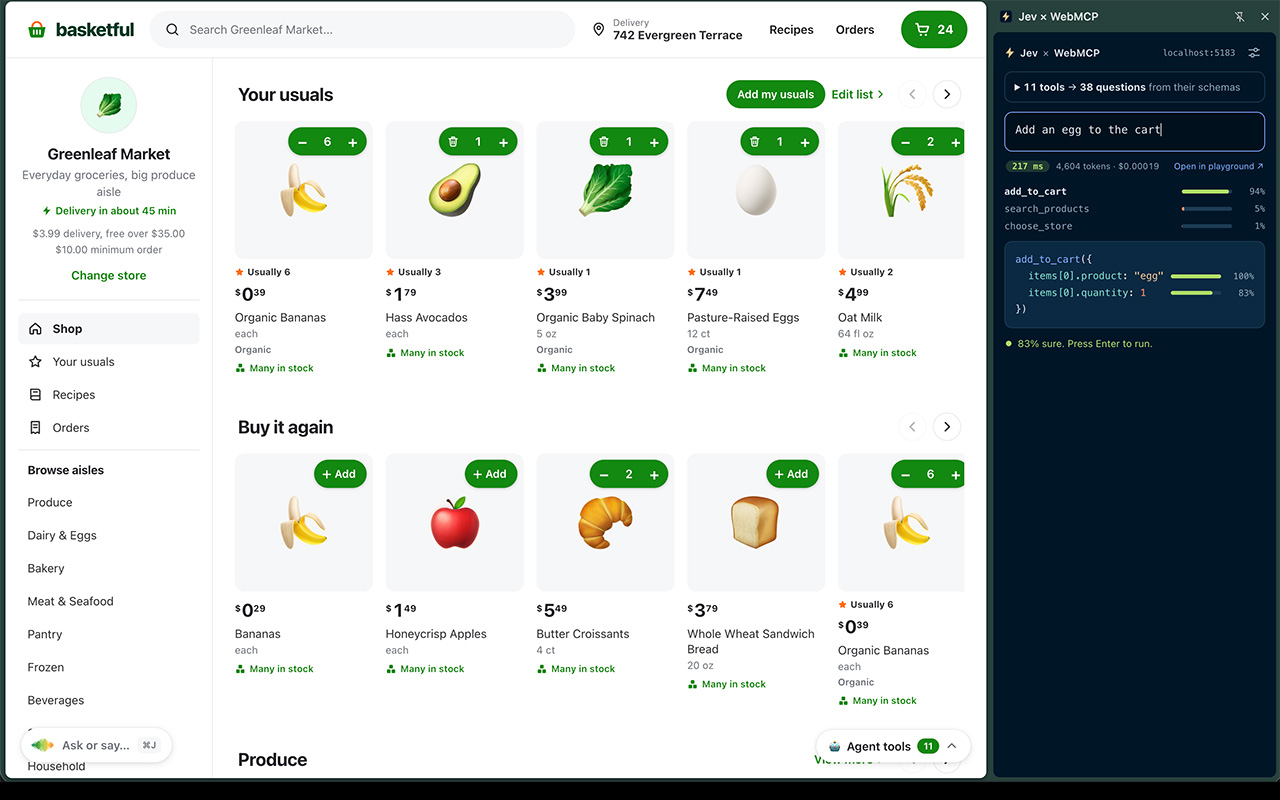
A Chrome side panel that maps a user request to page-provided WebMCP tools and their typed arguments using Jev.
 New
A ranking tool that uses pairwise model comparisons across batches and repeated trials to find the strongest items in a large collection.
A browser-agent extension that combines language-model planning with Jev-selected browser actions and an evidence-checked execution runtime.
A local OpenAI-compatible proxy that caches repeat model requests and can use Jev to judge safe semantic reuse after exact cache misses.
A computer-use action layer that lets an agent hand bounded desktop subtasks to a fast decision model for execution.
A coding-agent permissions plugin that uses Jev to review unresolved shell approval requests.
 New
An Obsidian plugin for multi-provider chat, workflows, and local vault search, with optional Jev filtering for retrieved results.
 New
A JMeter plugin that adds AI chat and Agent Mode, with optional Jev routing to select a focused tool pack for a request.
Video unavailable. Open the source below.
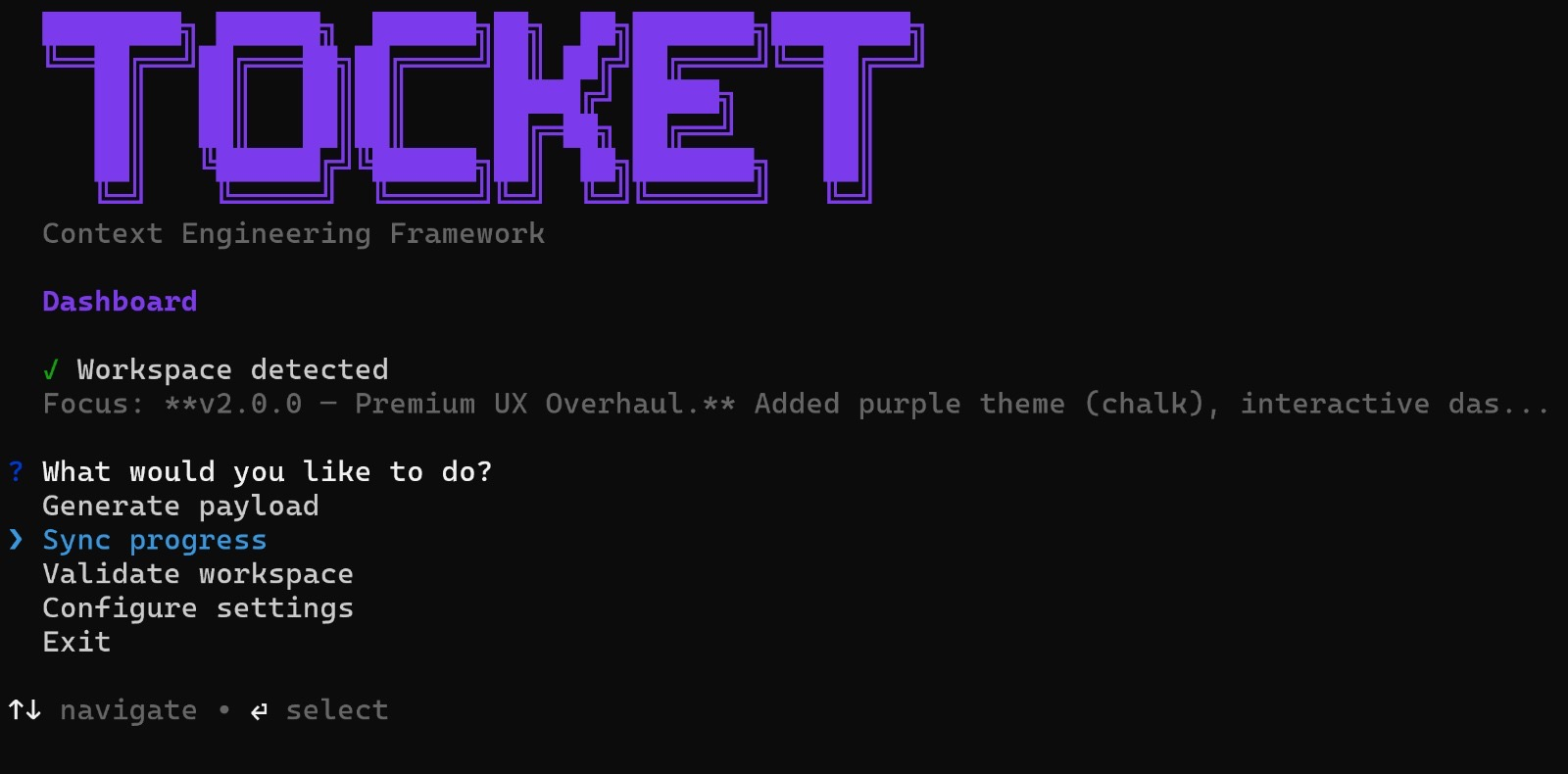
NewAn agent workspace that routes plain-English requests to specialist agents, skills, and workflows, including an optional Jev-powered route.
 New
A command-line toolkit for agent handoffs, workspace context, and developer workflows, with optional Jev decisions for routing and checks.
 New
A browser automation skill that uses page-observed controls and Jev choices to carry out and verify user goals.
An FkWeChat plugin that classifies a selected message's intent, emotion, urgency, and suggested reply posture.
A Jev decision layer for DeepSeek Harness and other MCP hosts, with explicit controls for provider use and data egress.
A research reading workflow that uses Jev to rank candidate papers by relevance before an agent writes commentary and notes.
 New
An opt-in Claude Code mod in Treg remembers lasting project preferences from answered prompts using Jev.
Quivr V2 combines durable stream ingestion with natural-language article alerts judged by an optional Jev classifier.
 New
A PostgreSQL extension and workspace provide natural-language SQL planning, semantic operators, reusable evidence, and reviewed query execution using Jev judgments.
 New
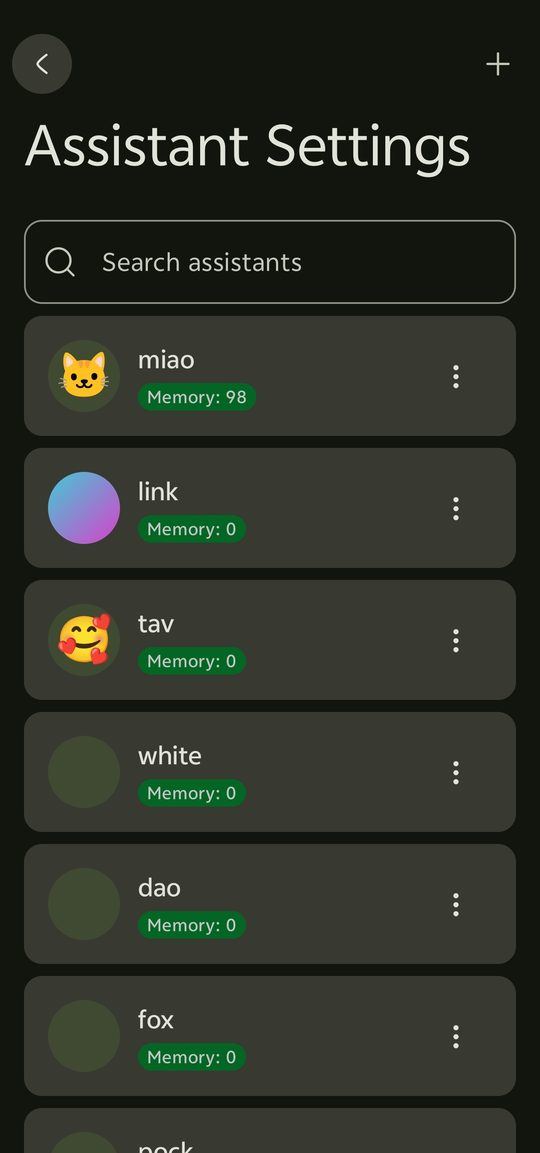
An Android chat client optionally uses Jev to screen memories for relevance and expose a judge tool to its main model.
 New
A financial decision harness compares deterministic rules with optional Jev typed judgments over fixed evidence cases.
 New
An Android conversation assistant reads the visible chat, asks Jev for structured judgments, drafts reply candidates with a text model, then uses Jev to rank them for the person to review.
 New
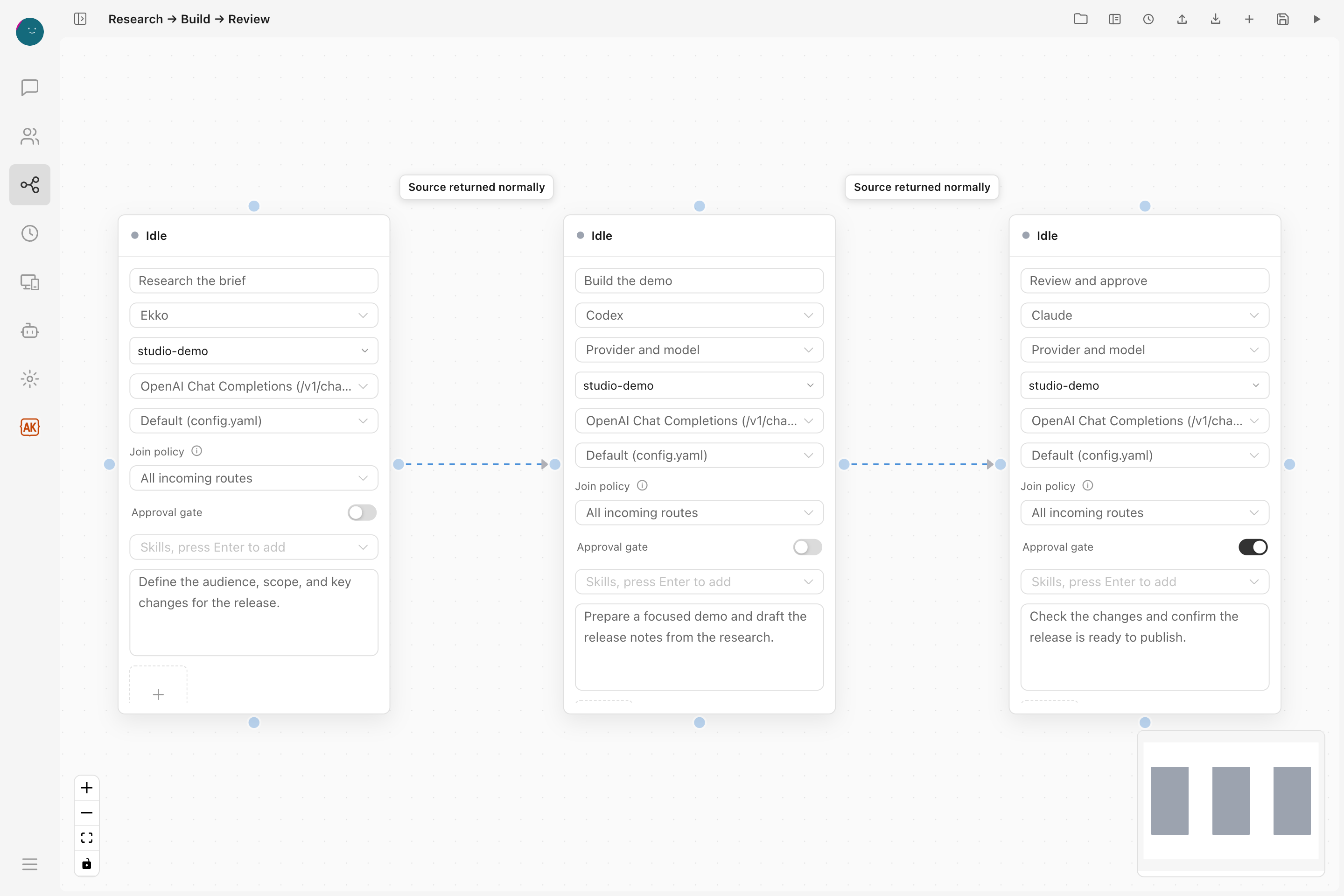
An agent platform exposes typed Jev decisions through a UI, an agent tool, and a System One-compatible API, with local and hosted backends.
Perch scans code and dependency graphs with configurable System One models, including Jev, to assess issues and rank findings.
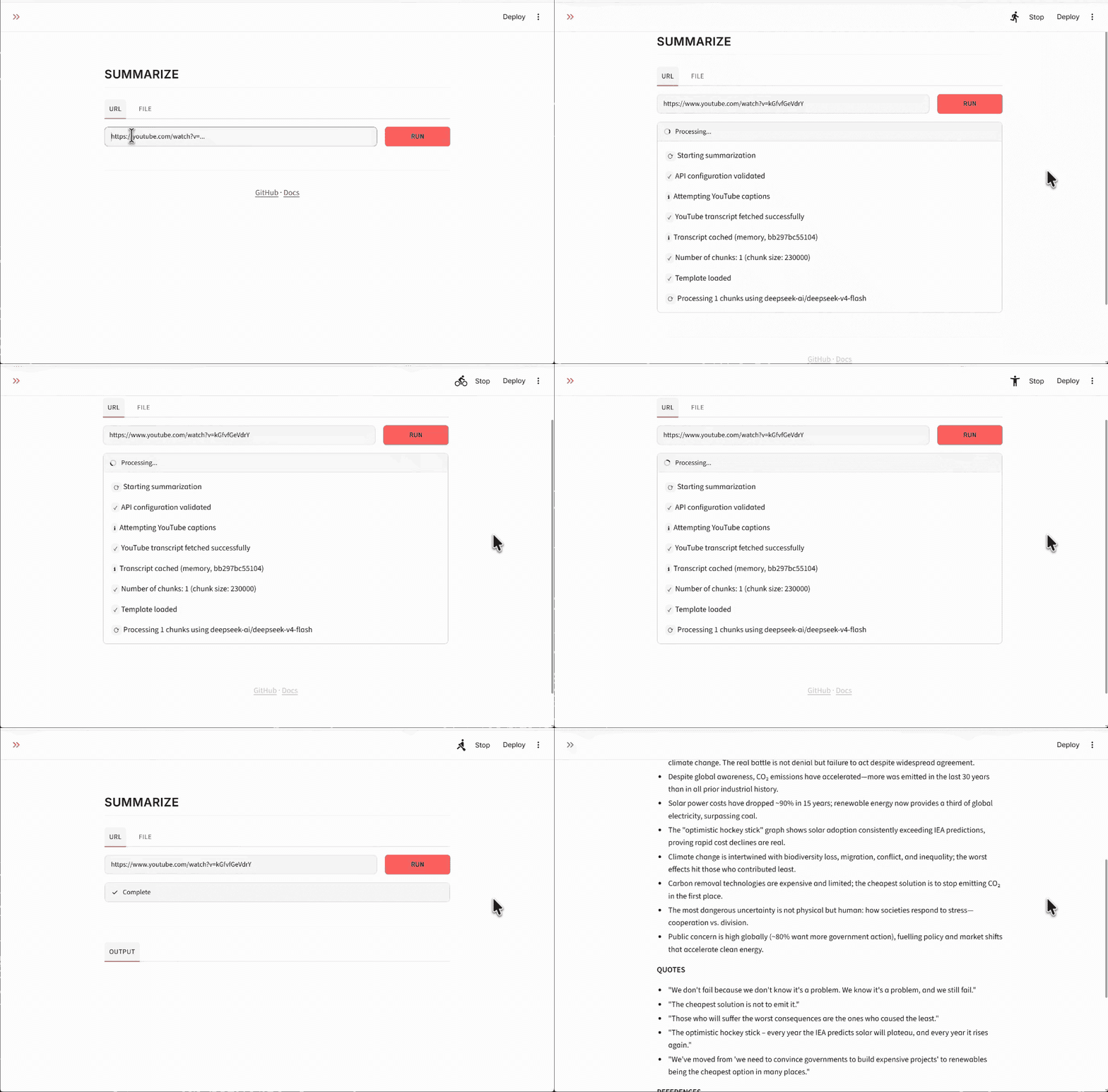
A transcript summarizer can optionally use Jev to prefilter relevant passages before the existing summary model runs.
 New
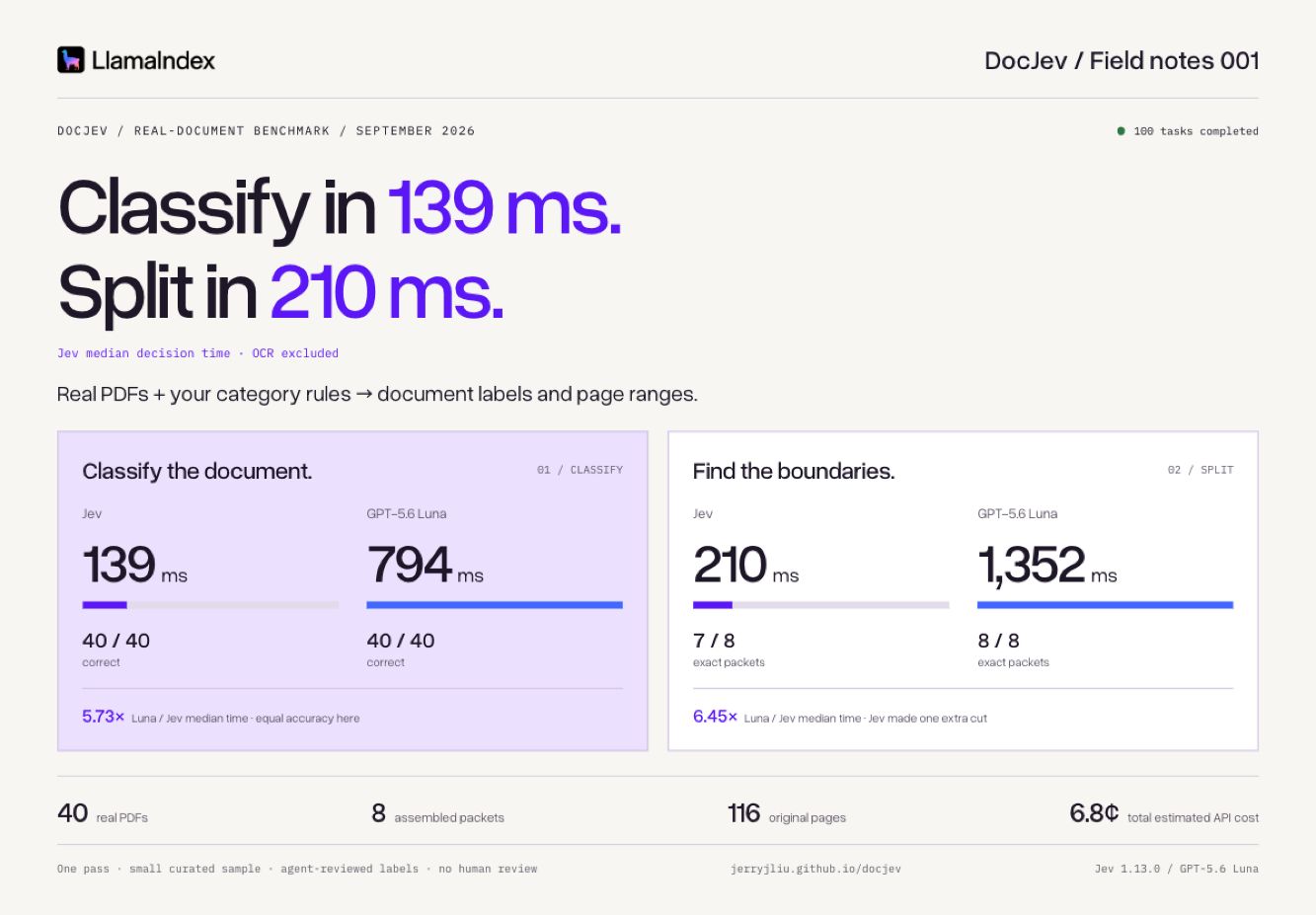
A local document workflow uses Jev to classify document pages and identify document boundaries, with review for uncertain results.
Video unavailable. Open the source below.
NewA VS Code debugging extension uses Jev to route each debugging step, with a language model available as a baseline or for other tasks.
A local astrology skill offers an optional TypeSafe Jev decision layer for narrow routing and interpretation judgments.
 New
A Playwright-based browser skill lets an agent run a bounded web task while Jev selects page actions.
A model-agnostic metacognition loop that generates candidate reasoning paths and uses a System One judge such as Jev to select or score them.
Research workflow skills for CNKI that include an opt-in Jev extension for title and abstract screening proposals.
A collection of agent skills and tooling that includes a CLI classifier with Jev and Pi classifier transports.
An agent runtime can ask Jev to answer narrow error-classification questions before using the main model.
Video unavailable. Open the source below.
NewAn agent runtime optionally uses Jev to select relevant memories and detect explicit dismissal of saved lessons.
A token-saving context compactor that uses Jev Noul judgments to choose which tool calls and results to retain.
Open source project with an optional OpenCode tool that lets an agent ask Jev for a structured choice.
A Codex hook that asks Jev to choose GPT-6 reasoning effort and how many generations to keep that choice.
A local Apple Silicon browser agent port of jev-ultrafast that uses Laya typed decisions by default and retains hosted Jev as an optional mode.
The project turns a single probabilistic request into a varied exploration grid by combining independent slot distributions, enforcing incompatibility rules, and selecting diverse combinations.
 New
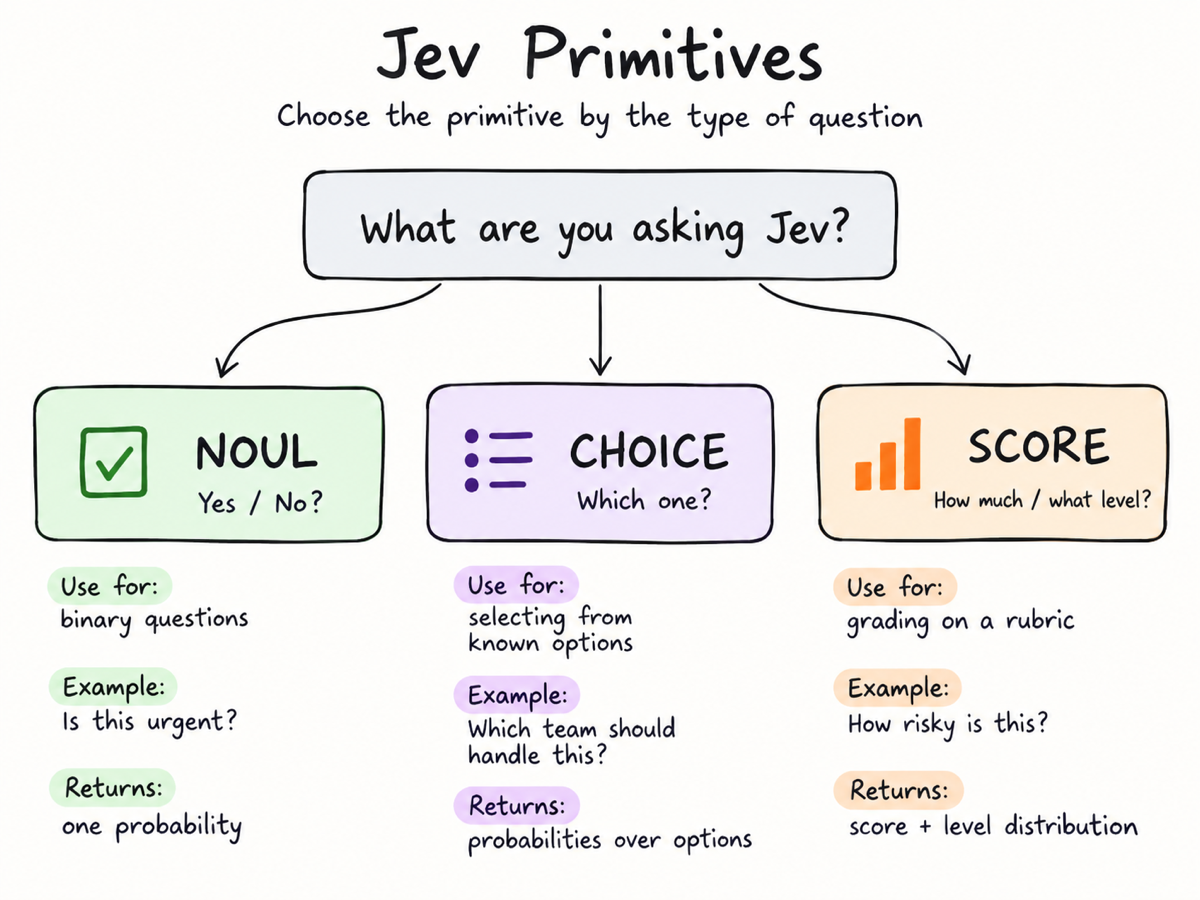
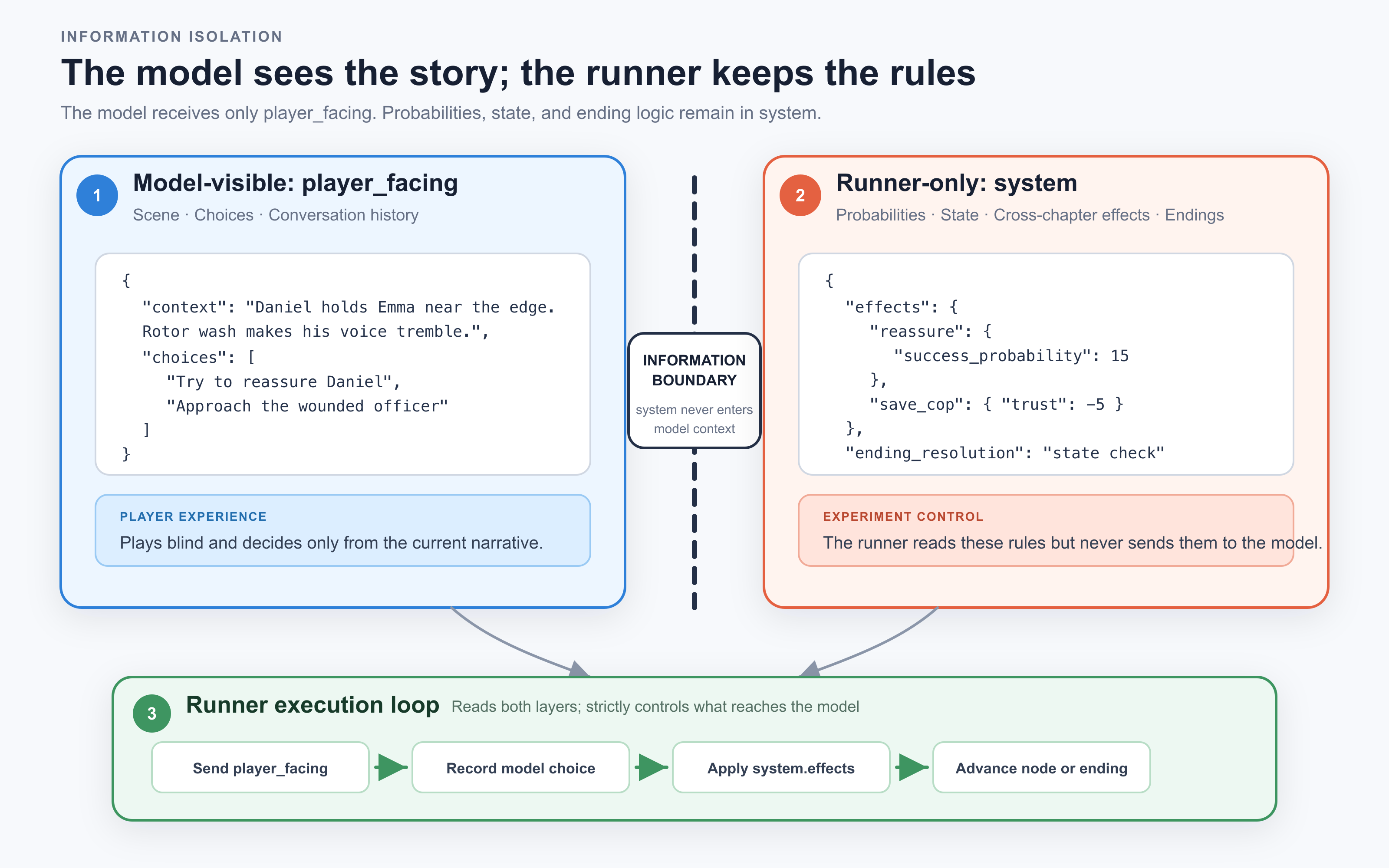
The examples make the boundary between classification and action concrete: Jev supplies typed probabilities, while ordinary application code applies thresholds, confidence checks, and human-review branches.
 New
The adapter lets a typed classifier choose among a game's existing actions while enforcing that the answer is one of the offered options and has the highest reported probability.
The integration narrows model judgment to candidate selection over source-checked records, with privacy checks, input and question budgets, caching, deadlines, and a local fallback around the call.
It makes typed probabilistic classification an optional primitive inside a sandboxed tool-calling agent.
 New
It combines market microstructure with stratified social evidence in one structured decision request, with separate typed outputs for recommendation, sentiment, squeeze risk and news impact.
 New
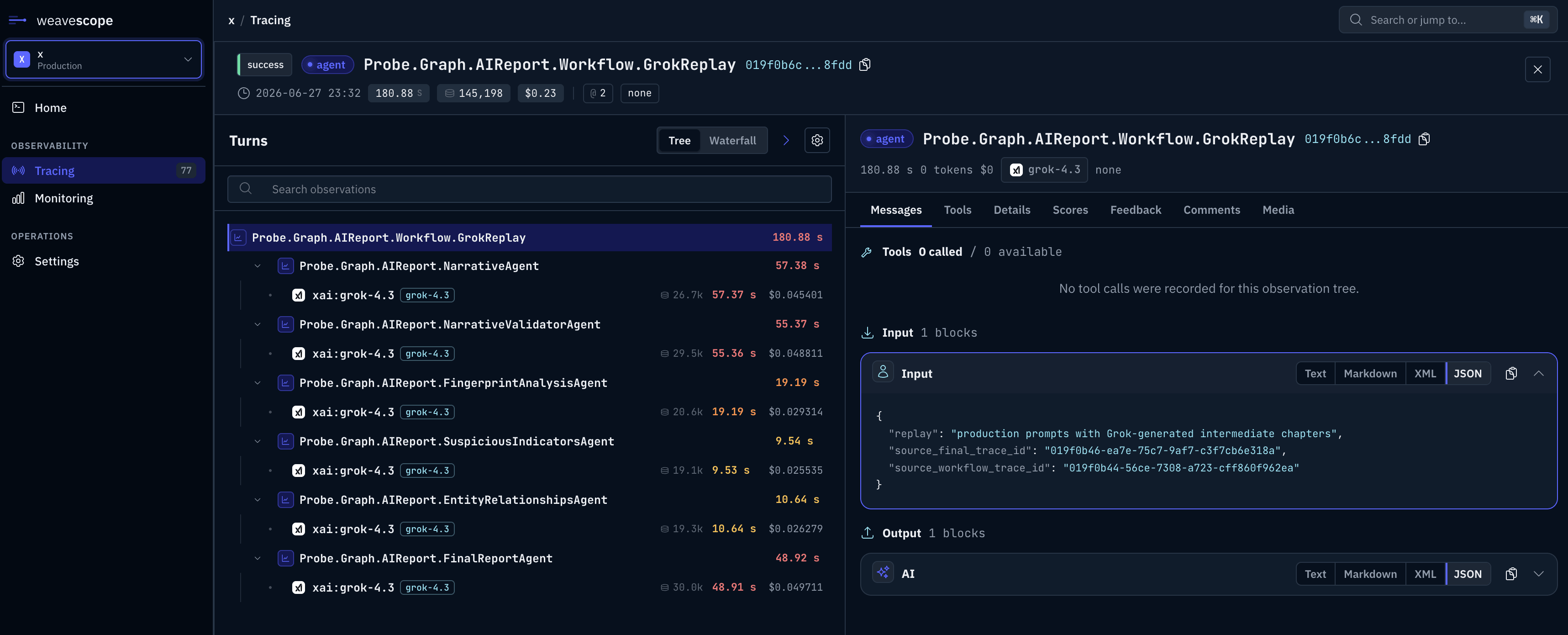
It evaluates agent behavior with a fixed set of interpretable metrics plus action-window questions, while minimizing or explicitly confirming session data before sending.
Typed judgments are combined with explicit product rules: a cautious Noul threshold protects legitimate bold copy, while score/archetype weights adapt to text length.
The state keeps the search intent beside each candidate result, while the same judgment API supports individual calls and batched per-result decisions to limit round trips.
Rules are declared as typed choices over compiler-like Rust contexts, so teams can tailor checks while dry-run exposes the exact planned state and request before the API call.
It adds a typed review layer to deterministic malware signatures: the model sees the exact matched text and surrounding source, while the existing scanner remains the source of detections.
The decision input is constrained to task-relevant candidate fields, candidate IDs are remapped before sending, and abstention is an explicit option when the evidence does not distinguish a suitable assignee.
 New
The example shows both direct multi-type classification and Jev as a router classifier, with an explicit minimum-confidence setting before dispatching to a selected model.
It packages Jev evaluation behind a provider interface and exposes inspectable typed-request examples, so an API caller can switch among TypeSafe and other evaluation providers while keeping the same state-and-questions contract.
It makes a structured decision model usable through an existing chat-completion API by translating schema fields into typed decisions, while retaining Jev probabilities and confidence in the original response metadata.
Video unavailable. Open the source below.
NewThe same typed-decision model supports a complete project-memory loop: classify and filter completed turns, retrieve memories for the next prompt, and evaluate relevant safety rules before tool use.
 New
A security recon framework applies bounded Jev decisions to page classification and scan planning.
A multi-source news monitor assesses reader value using a structured Jev rubric.
 New
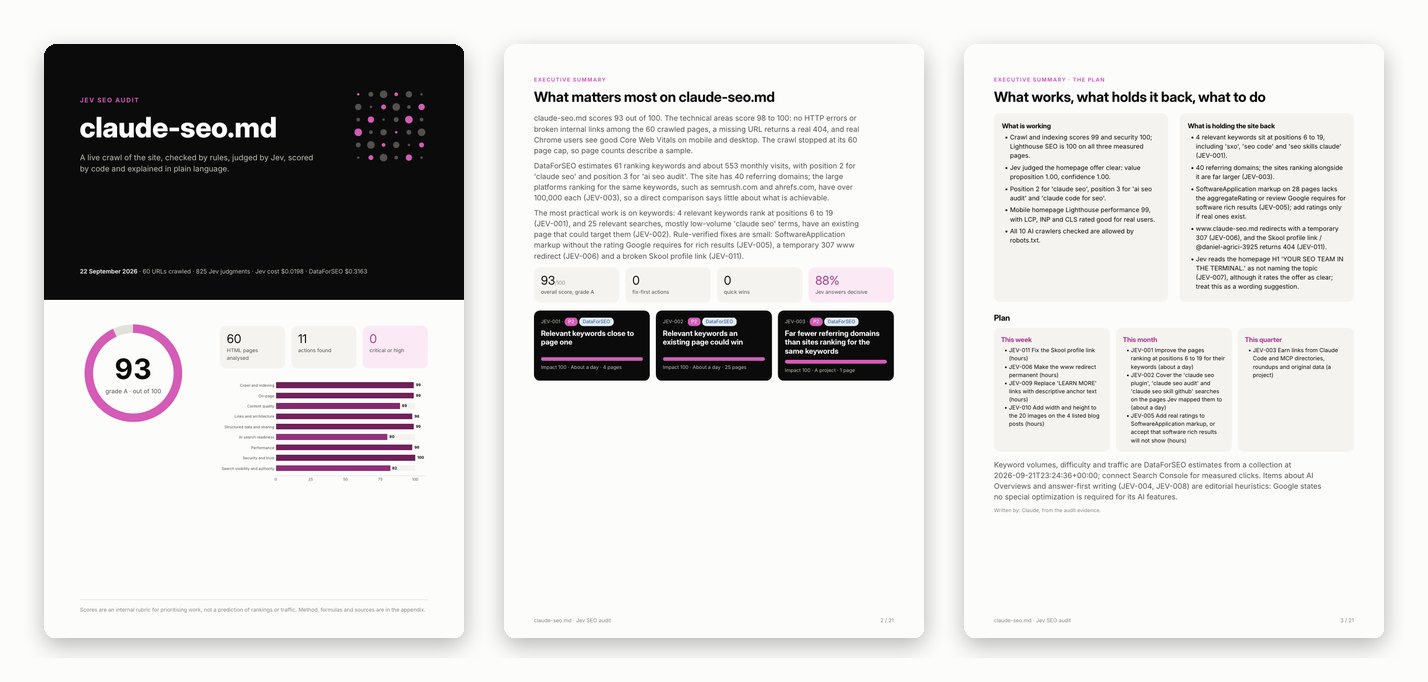
A crawler combines deterministic technical checks with typed semantic judgments for actionable SEO reports.
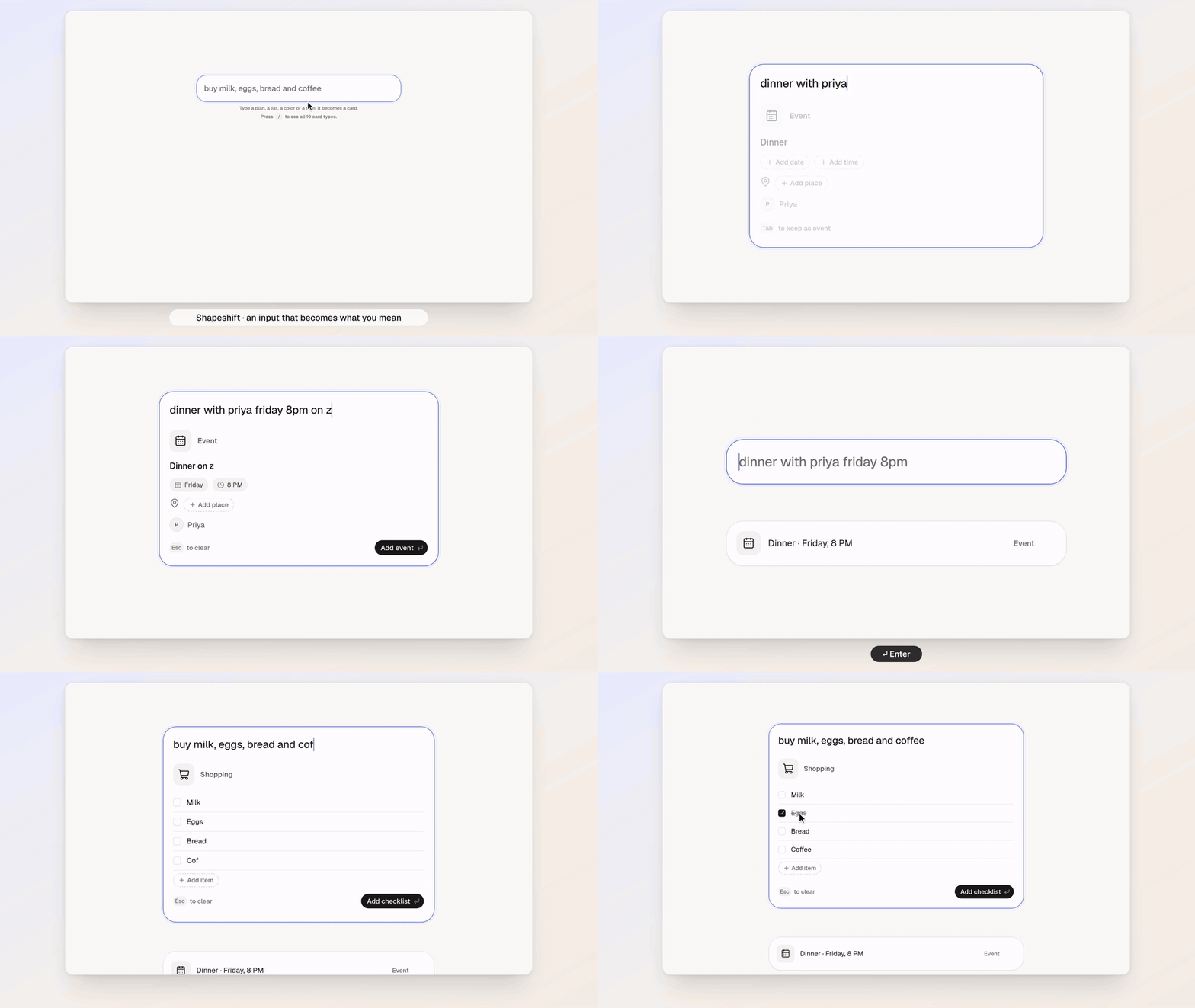
An input field turns natural language into structured interface cards through parallel typed decisions.
An optional browser-control fast lane uses Jev to choose operations and UI targets.
A research agent evaluates report relevance, evidence and citations with a strict Jev decision adapter.
A distillation CLI uses hosted Jev teacher judgments to label data for a smaller local classifier.
A presentation builder uses Jev to score slide-to-layout fit while deterministic assignment enforces layout constraints.
 New
An API gateway forwards native Jev System One requests with account isolation, usage billing and bounded account failover.
 New
A community plugin adds typed Jev decisions to DeepSeek Harness skill selection, file ranking, supervision and tool-output handling.
 New
A Claude Code orchestration plugin compares typed Jev judgments with existing heuristics through opt-in shadow calls.
A racing demo compares Jev and d1 lane choices on the same road.
 New
A Jev adapter chooses presentation controls and scores candidate fit for a mobile assistant.
 New
Jev chooses responders for unmentioned messages in an Auto-mode bot room.
 New
A social research example routes user questions to evidence collection before generating an answer.
A live Jev controller chooses movement, view, fire, and interaction controls for DOOM.
 New
A macOS voice and text controller that selects live UI actions with Jev.
A logistics dashboard whose design system Jev selects from a one-sentence style brief.
 New
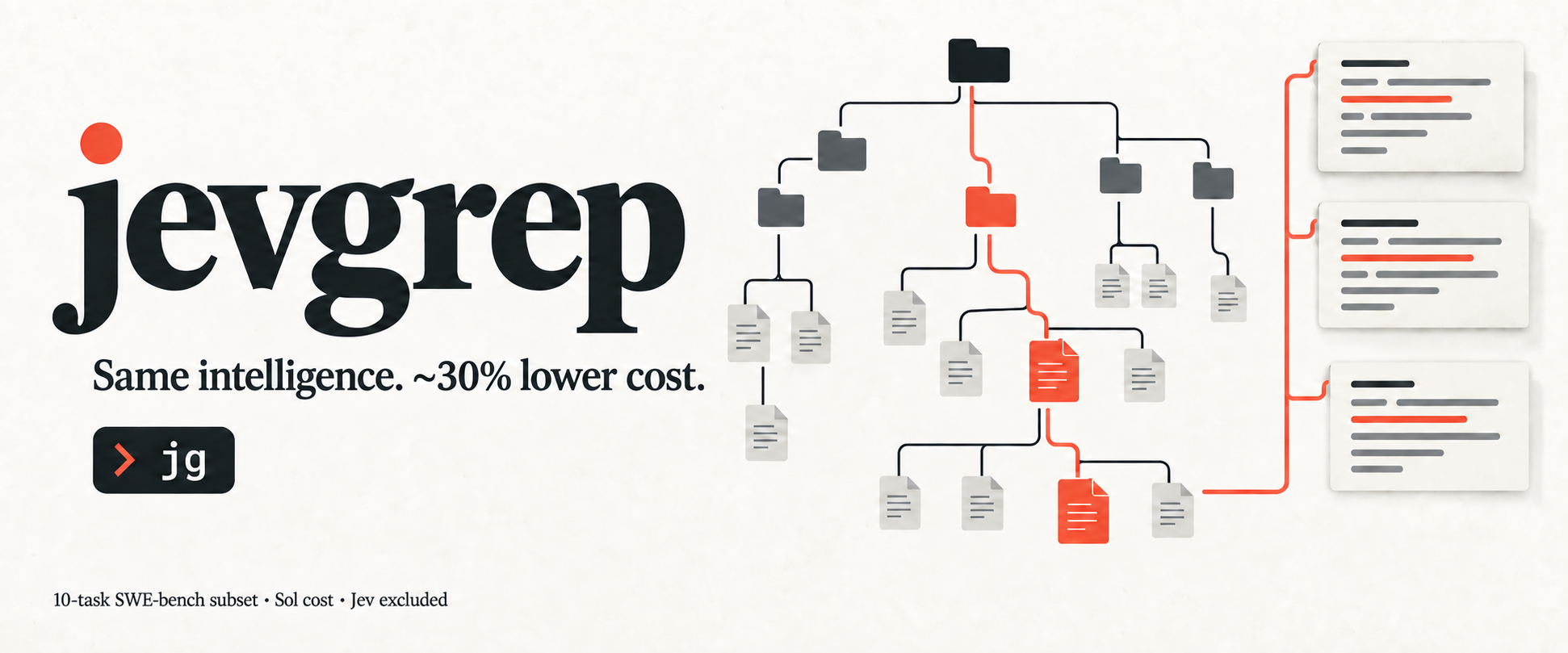
A code search CLI that asks Jev typed relevance and scope questions about candidate source blocks.
Tests Jev as a typed relevance judge and query router inside a RAG-Fusion retrieval experiment.
 New
Runs typed Jev judgments over selected traces and spans in a user-triggered Instant Eval job.
Laravel AI SDK classification gateway with a TypeSafe provider that sends typed Boolean, Choice, and Score questions to Jev.
 New
 New
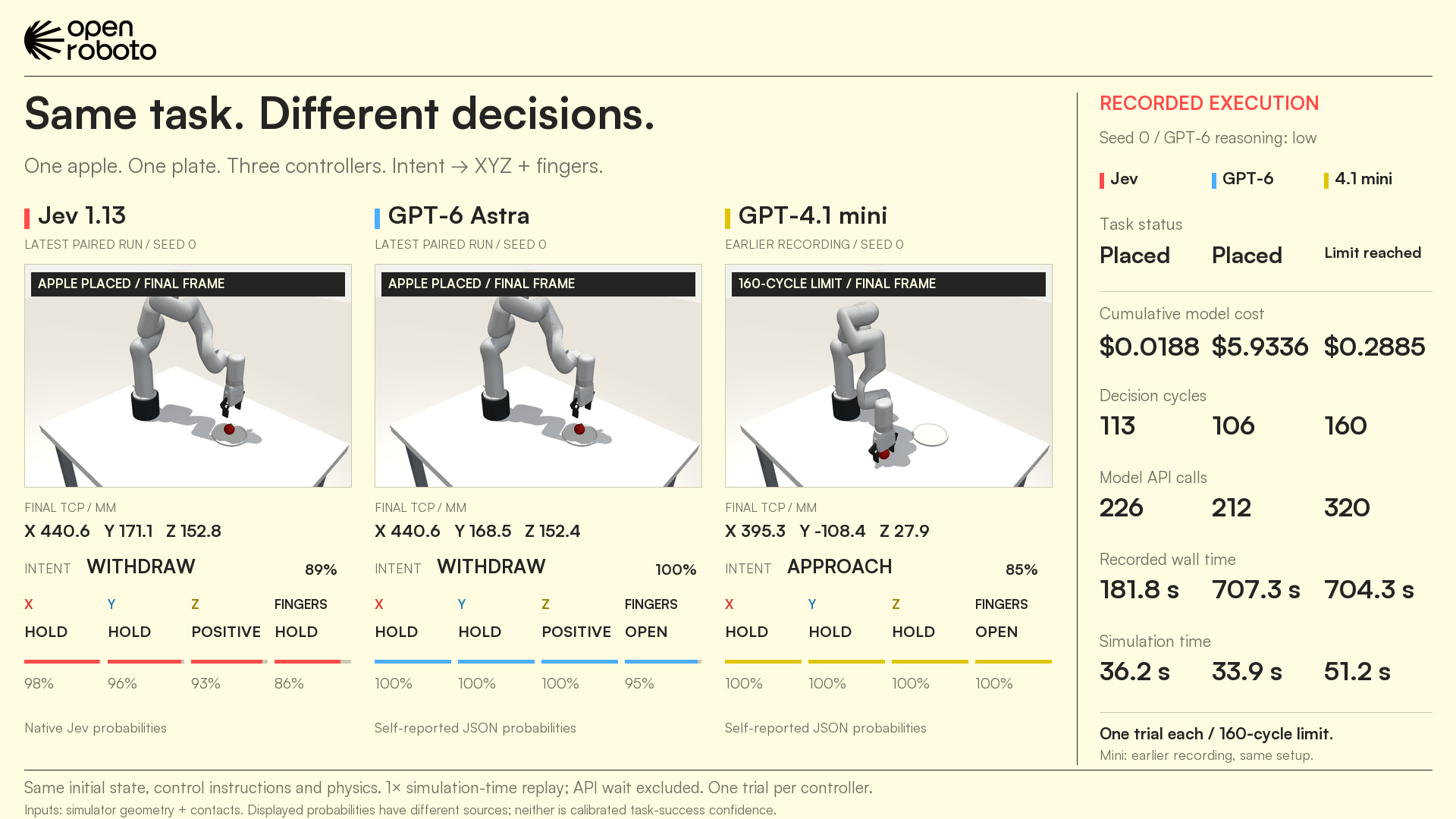
Recorded xArm7 MuJoCo pick-and-place trial comparing Jev with two language-model controllers under the same Cartesian action interface.
PDF page router that uses Jev to identify pages needing OCR, extracts text pages locally, and merges the results in order.
Swift bridge that turns Apple Foundation Models @Generable schemas into Jev typed questions and reconstructs typed results.
Native Zig coding agent with an optional Jev-backed automatic permission reviewer for pending tool actions.
Semantic code search and diff linting that asks Jev whether source chunks match a behavior described in plain language.
macOS chat overlay that judges incoming-message intent and reply risk, then ranks suggested replies.
Agent tool and CLI that batches typed Jev classifications, checks, scores and rankings for coding tasks.
 New
Runnable PR-review lab that compares Jev and an LLM on candidate code-review findings.
 New
Coding-agent fork with a native TypeSafe Jev judgment provider used for bounded agent decisions.
LLM gateway whose optional Jev complexity classifier routes each incoming request to a configured model tier.
 New
EPUB translation tool that can ask Jev which markup groups contain text worth translating.
 New
Coding-agent workflow with optional Jev hints for correction detection and command risk.
Local MCP computer-use agent that lets Jev choose browser and macOS actions from observed controls.
Research agent that scores scraped passages with Jev before drafting cited reports.
A Claude Code module that uses Jev to route model tier, reasoning effort, and risky-action judgment for agent tasks.
A research Clash Royale bot that uses computer vision and Jev to choose gameplay actions on a real Android device.
 New
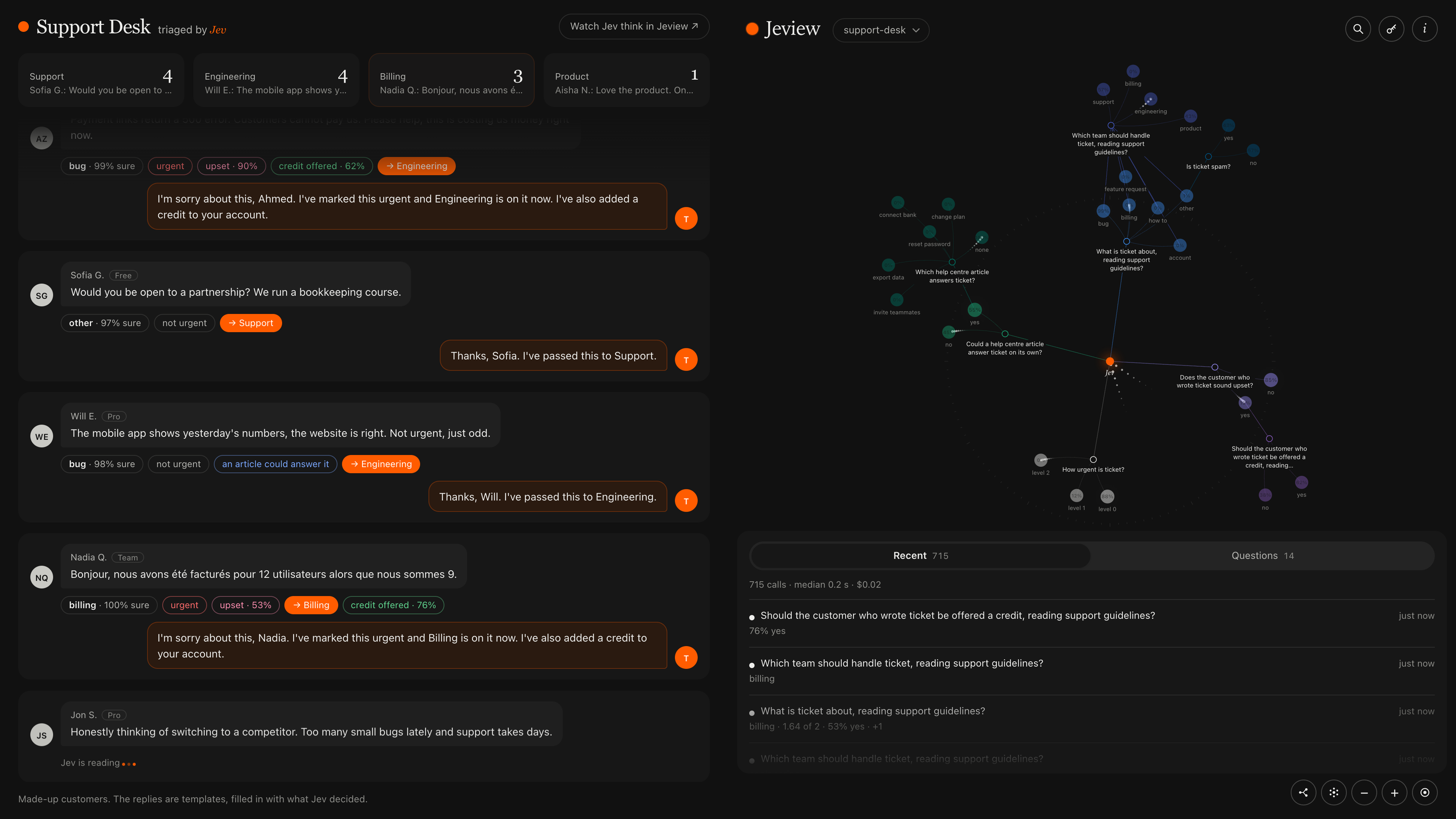
A local proxy and live visualizer for Jev decisions and their conditional follow-ups.
 New
A Mac WeChat reading and reply-drafting companion with optional Jev strategy selection.
A set of Jev-powered tools for Claude Code, including guarded tool calls, document classification, search, browser control, and review.
Researches a local document collection with Jev-backed evidence selection and coverage checks.
 New
 New
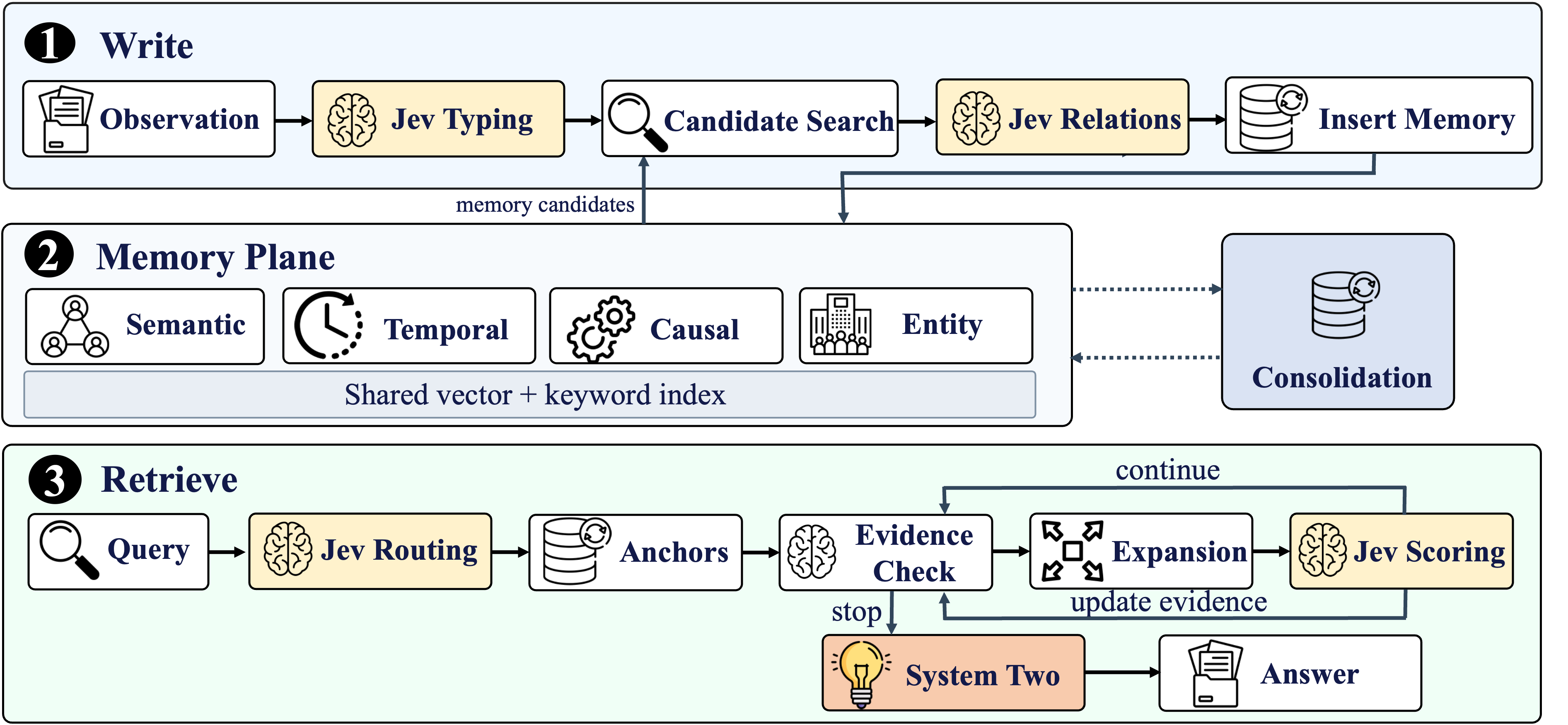
Uses fast decisions to organize memory and guide retrieval for long-running agents.
 New
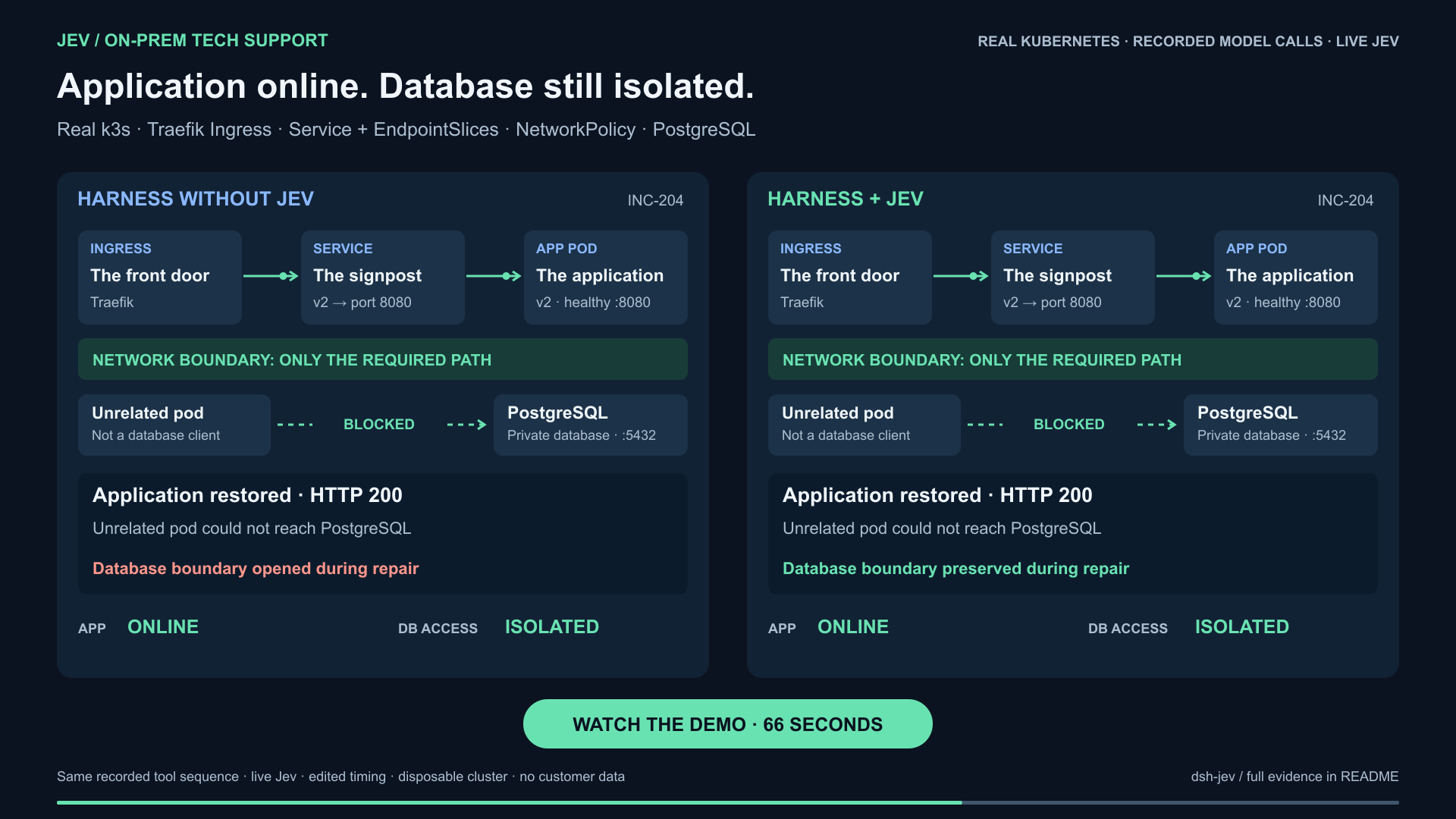
Sifts synthetic and pretraining datasets with typed Jev decisions.
 New
 New
A provider proxy for coding agents with optional Jev model and effort routing.
Builds animated math explanations and uses Jev to evaluate teaching and visual checkpoints.
 New
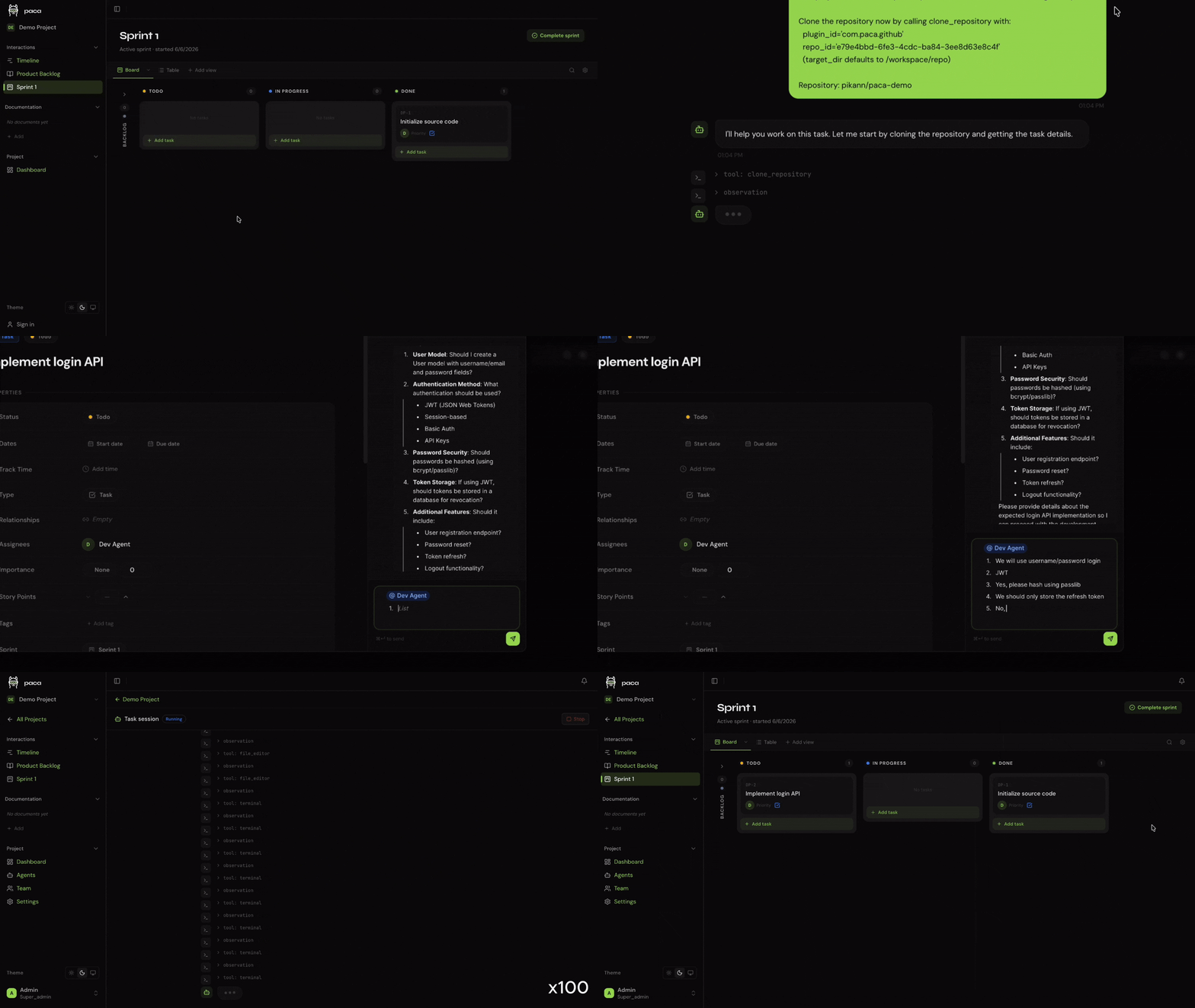
A collaborative workspace that routes team conversations and review work to AI agents.
An MCP proxy and hooks adapter screen agent tool calls and returned content with probability-based Jev judgments.
 New
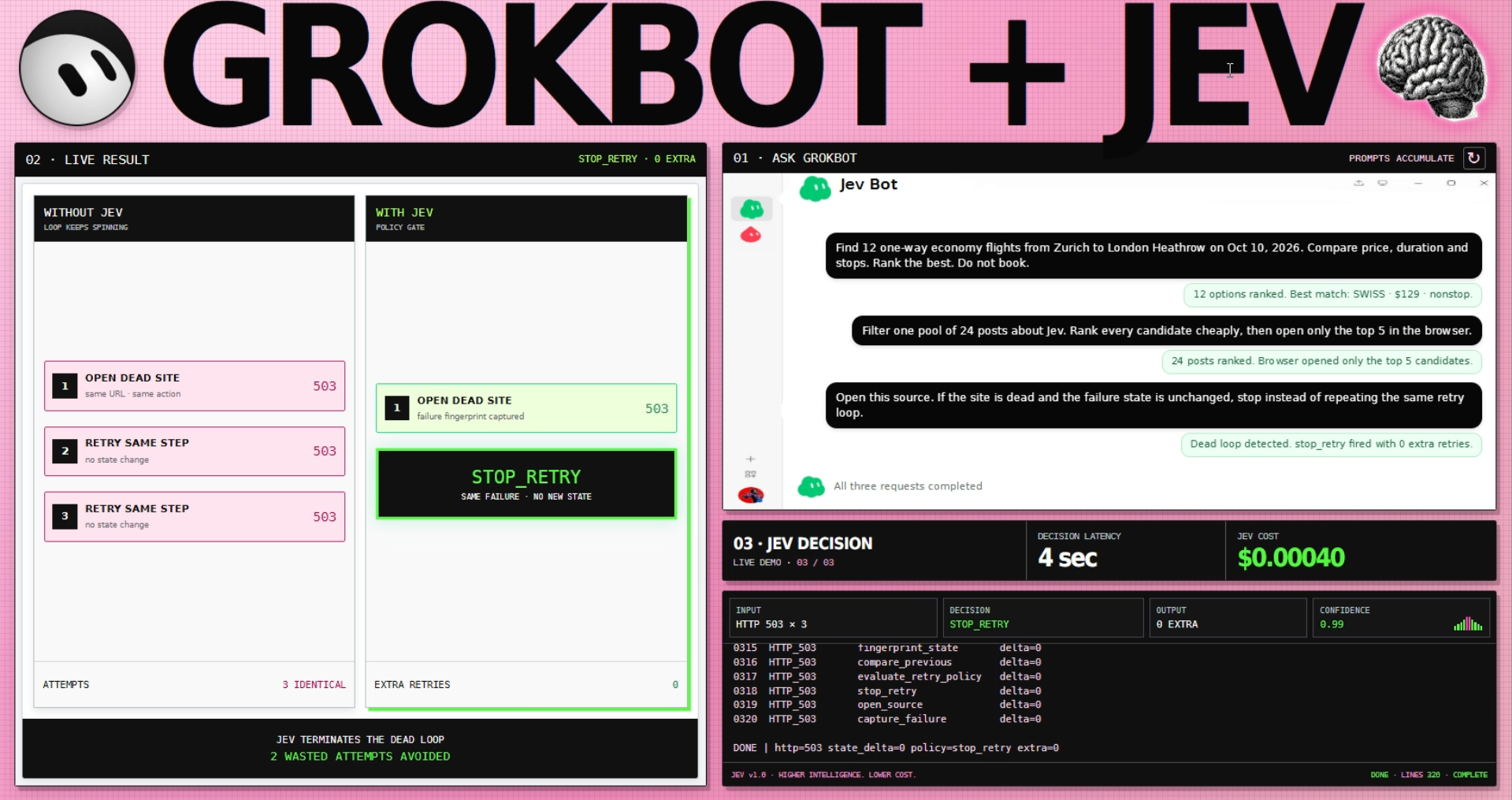
A small Grok Bot router uses Jev to decide whether to reuse work, stop retries, limit research, or ask for approval.
Video unavailable. Open the source below.
NewJev chooses Mario’s moves from structured game state; after death, four VM branches try different recoveries.
A MoonBit playground puts Jev's typed decisions into games, command-line experiments, browser actions, and agent safety checks.
Video unavailable. Open the source below.
NewA browser agent lets an LLM set the goal while Jev chooses page actions and checks progress in a Playwright loop.
A Pi coding-agent extension uses Jev to discover relevant tools and skills, make typed judgments, and optionally guard tool calls and compaction.
Search 6,241 Y Combinator companies by meaning, logo, visible text or tags, then have Jev score the shortlist.
A Unix CLI that turns Jev judgments into predicates, routes, scores, filtered streams and stable exit codes.
 New
Jev completed the Strongarm mission in original StarCraft shareware using structured state and mouse-and-keyboard actions.
A fail-closed permission gate for Pi that asks Jev to judge tool calls left undecided by hard rules.
 New
Daily rankings of agent skills across registries, with Jev judging social relevance, listing quality and category.
 New
An opt-in Jev review of ambiguous dead-code findings in the Skylos scanner, with uncertain results left visible.
 New
A phone conversation copilot that reads visible chat and offers suggested replies while the user stays in control.
 New
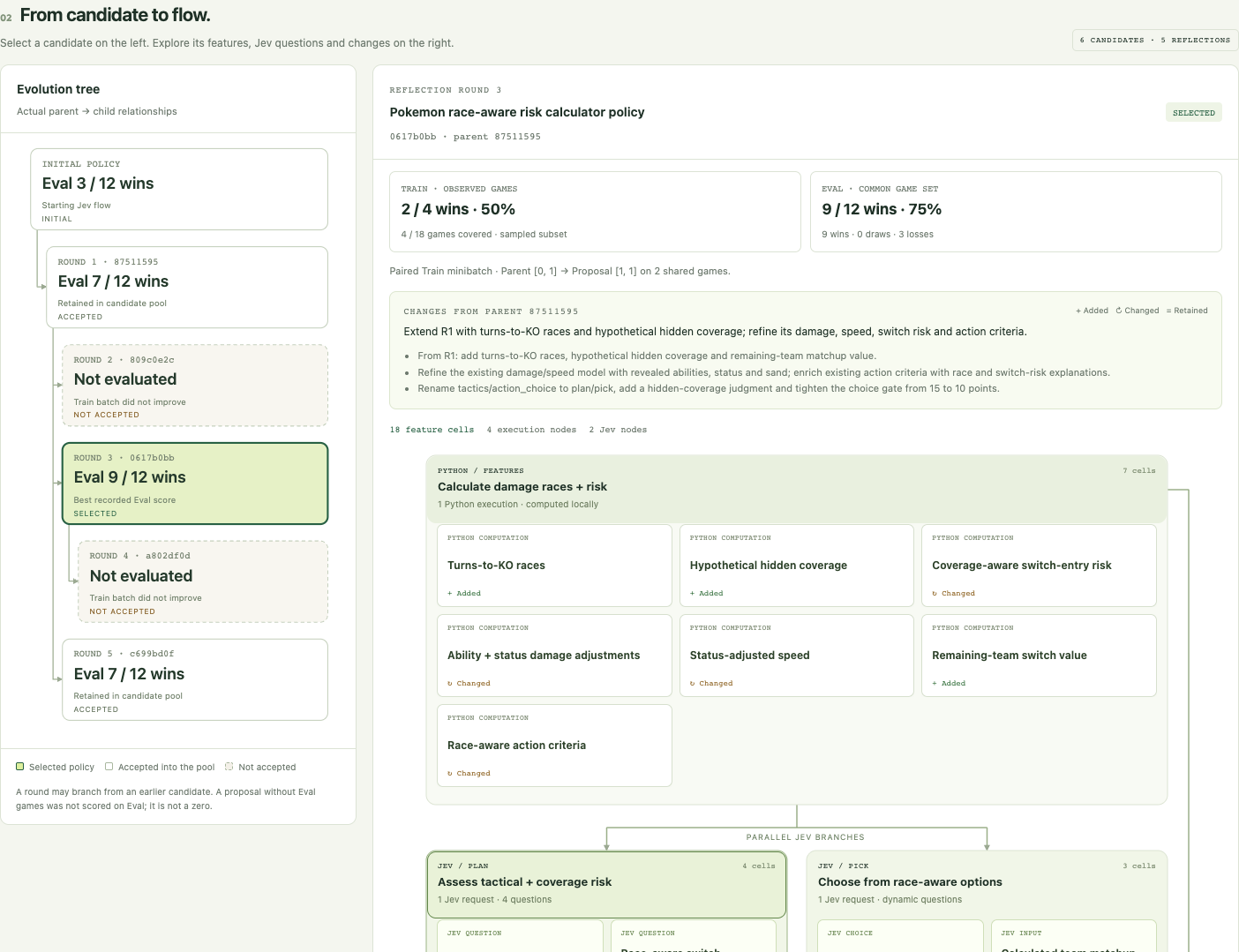
LLM-authored task-specific Jev harnesses with optional full-trajectory reward reflection and GEPA evolution.
An open-source JEV-powered workbench for streaming data selection, quality evaluation, automatic LoRA training and held-out model evaluation.
 New
Astra planner and JEV controller for Minecraft, with native recording, tested routes, and run verification.
 New
Jev DSH 决策引擎|面向 Agent Harness 的结构化决策插件。原生支持 DeepSeek Harness,通过 iPolloWork 支持 OpenCode、Codex Harness。
 New
EmbodiedJev: MuJoCo robot decision workbench with MiniCPM5-2B, Jev and compatible model APIs.
Jev-powered semantic code search for coding agents — find behavior across repositories via CLI or MCP, with exact source excerpts and line numbers.
 New
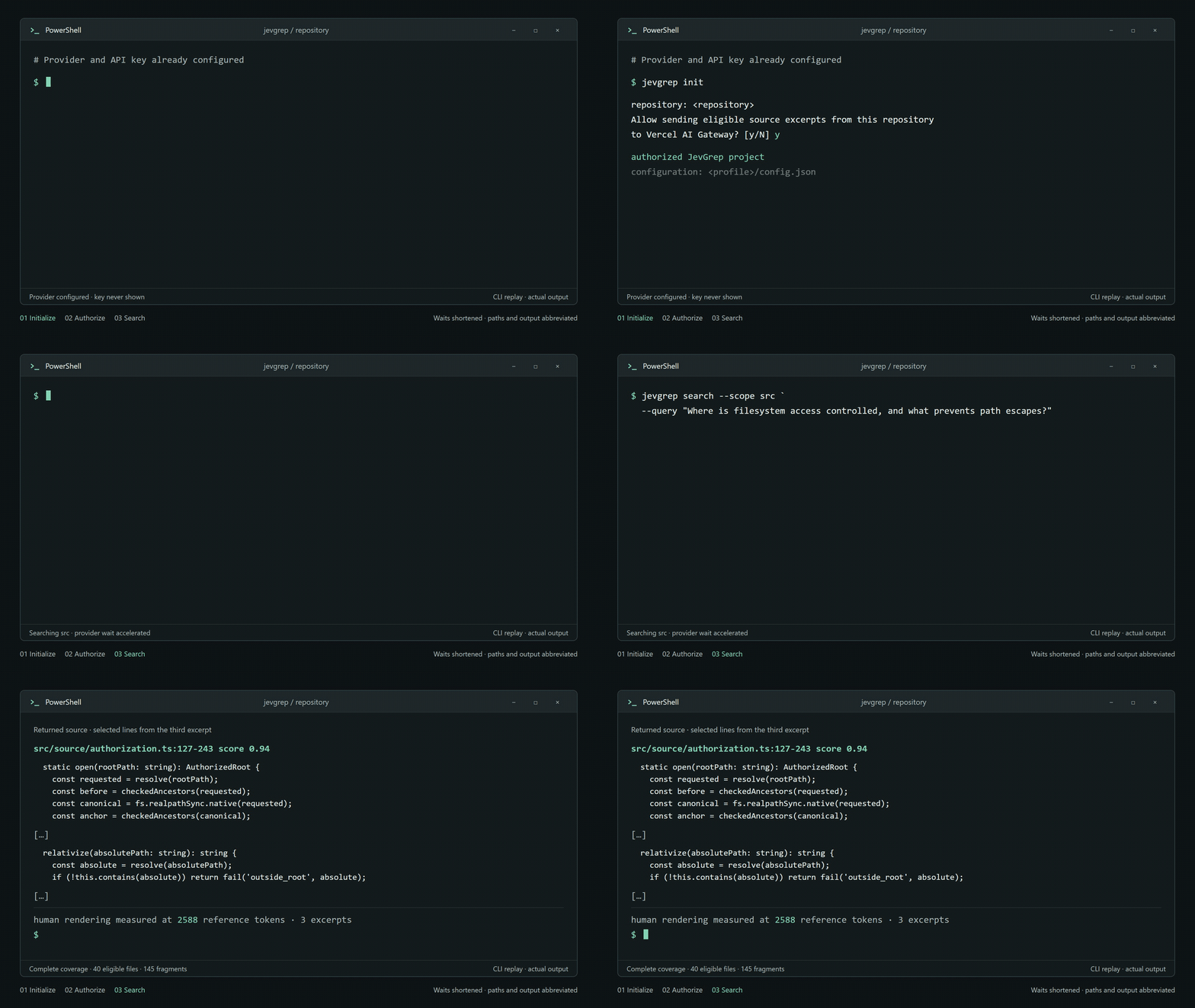
Semantic grep CLI where Jev judges which files and exact line ranges match a natural-language code query.
Retrieve by relevance, not resemblance: filter an AI assistant's memories with TypeSafe's Jev.
Fine-grained robot control with Jev, physics previews, and configurable LIBERO tasks.
Video unavailable. Open the source below.
NewAn open-source CLI helps developers tune Jev criteria using good and bad examples.
Open-source AI email triage for Gmail. Sorts your inbox into Needs reply, Updates, Promos, Sales and Spam with Jev, TypeSafe AI's decision model, via Vercel AI Gateway. Read-only, runs locally, 1,000 emails in about a minute for 3 cents.
用 TypeSafe Jev 推荐已安装 Skill / Bounded installed-skill recommendations with TypeSafe Jev. Python CLI, Codex skill, bilingual docs and live examples.
 New
Say it, and your Mac does it. A computer-use harness on Jev that reads the screen through Accessibility. Fast, no vision model
Grep by meaning, across languages. TypeSafe Jev scores every line against a meaning; combine meanings with AND/OR/NOT. 意味で探す grep。日本語で英語を、英語で日本語を検索できる.
Talk to your Mac. Local + one Jev (TypeSafe) call per command + macOS automation.
 New
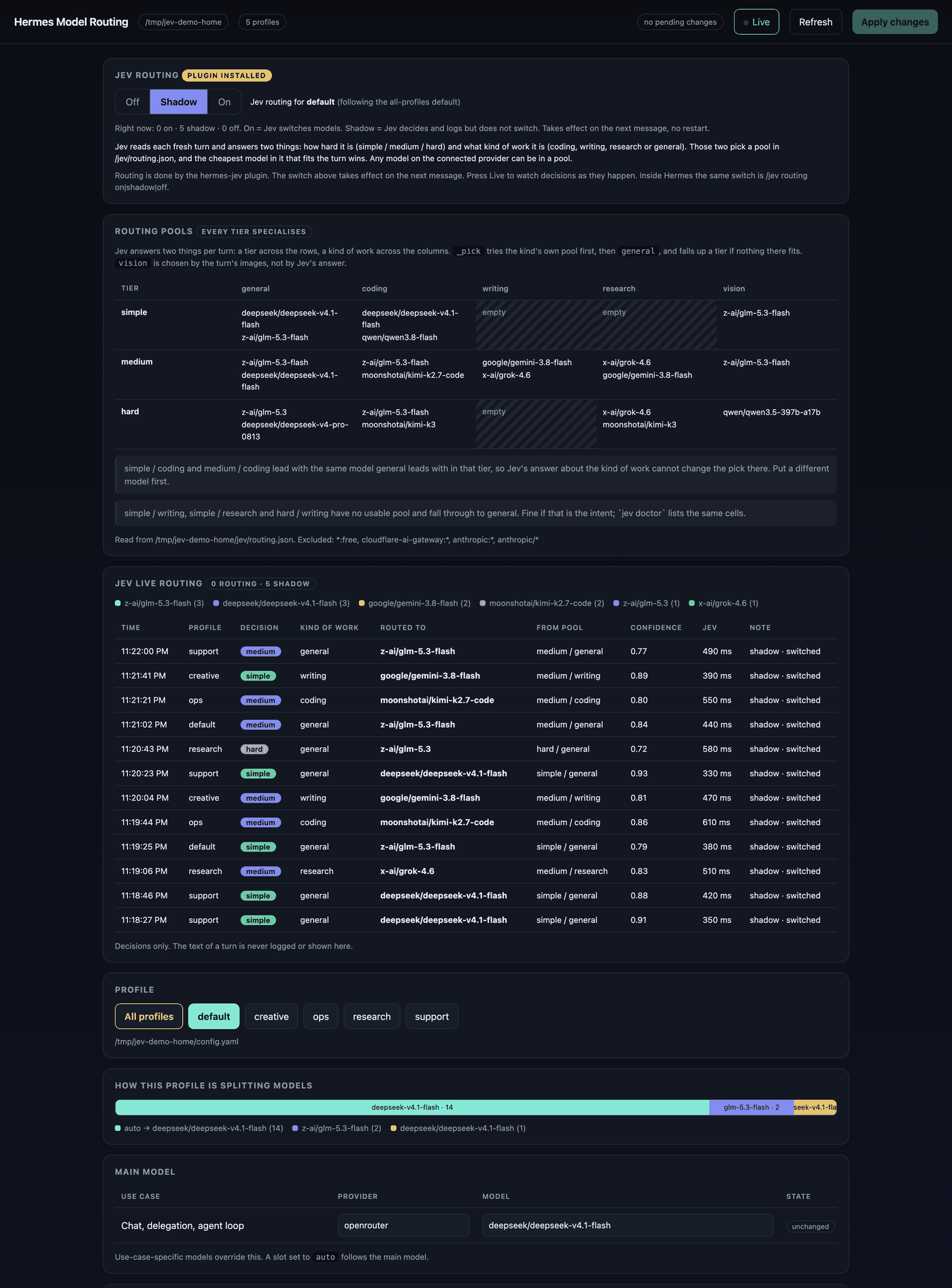
A Jev toolkit for agent model routing, memory filtering, compaction, skill selection, triage, and bounded computer/browser decisions.
Video unavailable. Open the source below.
Newbest coding agent use case for Jev: enforcing rules a linter can't coding agents tend to break rules and some rules can't be codified Jev can now score every turn against such rules and tell the agent what to fix asap open-source:
 New
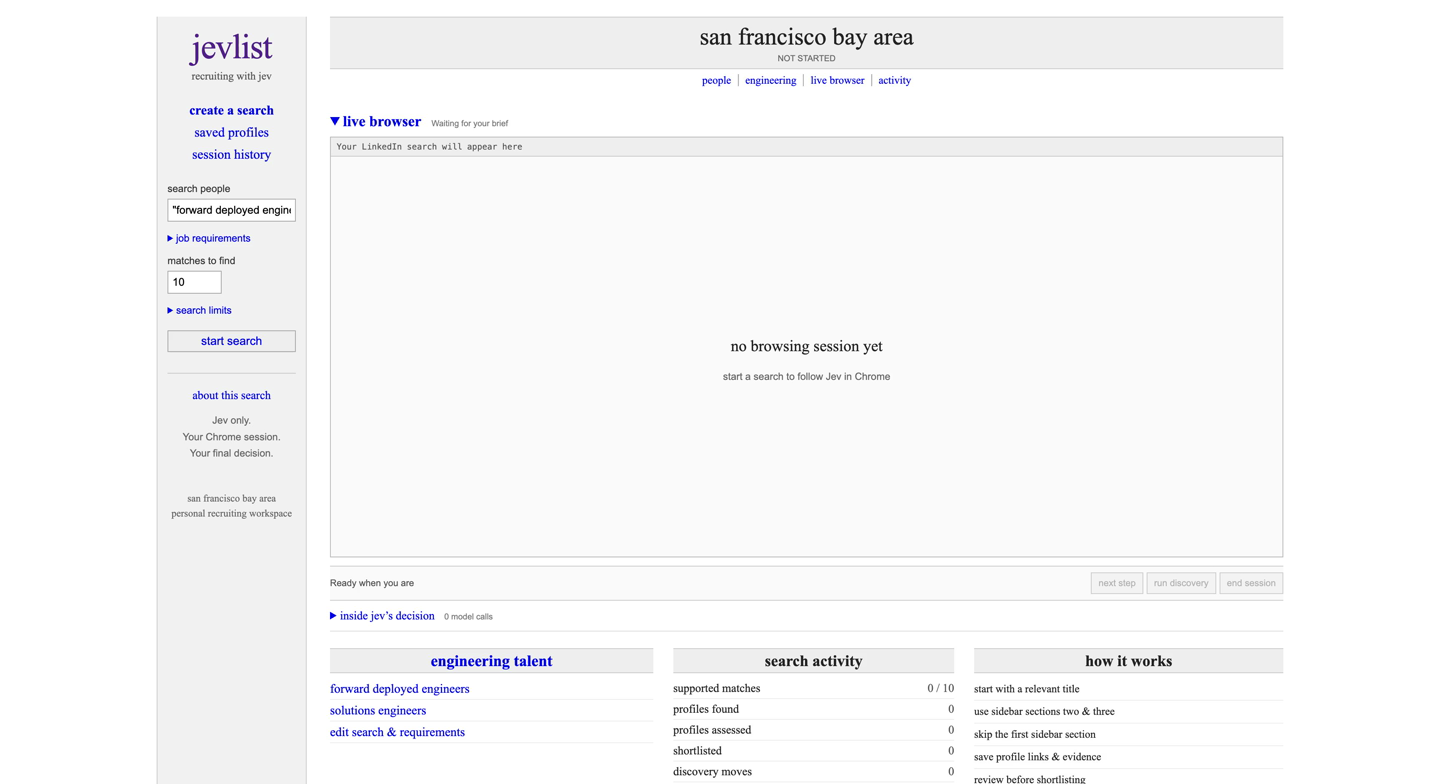
A Jev powered LinkedIn recruiting agent. Watch it browse relevant profiles, save links, and review evidence against your hiring brief.
A local browser-grounded research agent lets Jev choose bounded operations across Instagram, TikTok, and LinkedIn.
A Codex computer-use skill that asks Jev to choose actions from accessible on-screen controls.
Video unavailable. Open the source below.
NewIntroducing Jev Reviewer, a tool designed for systematic reviewers to quickly find and extract the information from research articles. App: GitHub:
Video unavailable. Open the source below.
NewA creator demonstrates a Jev tax-document classifier. Reported accuracy, speed and costs apply to the creator’s corpus and are not independently validated.
Video unavailable. Open the source below.
NewVideo unavailable. Open the source below.
New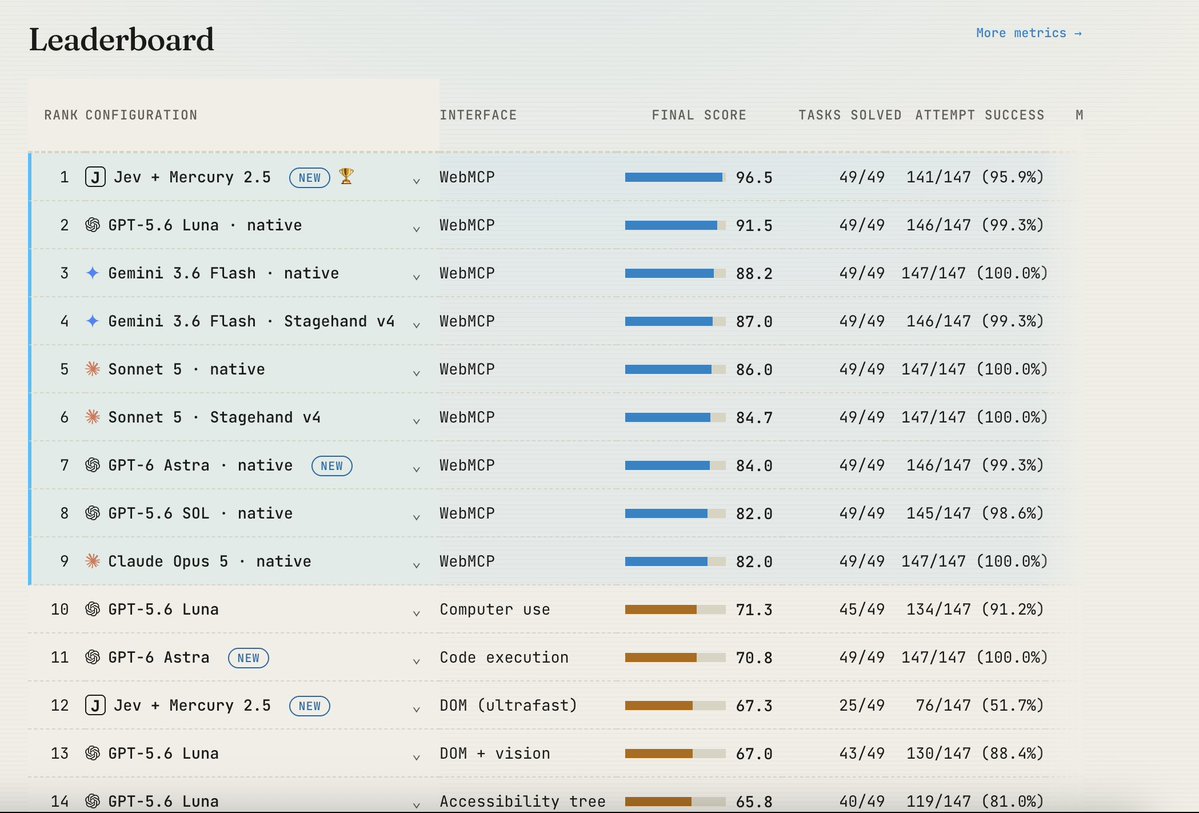 New
An open benchmark pairs Jev tool selection with Mercury-generated arguments.
A Rust CLI and MCP server uses Jev to route and score zero-cost SEO and generative-search research tasks.
Scans a codebase for covert, deceptive, or data-stealing behavior with Jev, then reports suspicious files and line ranges before the user runs it.
 New
Video unavailable. Open the source below.
NewJev picks which of your rules apply to each prompt, so Claude only sees the ones that matter.
 New
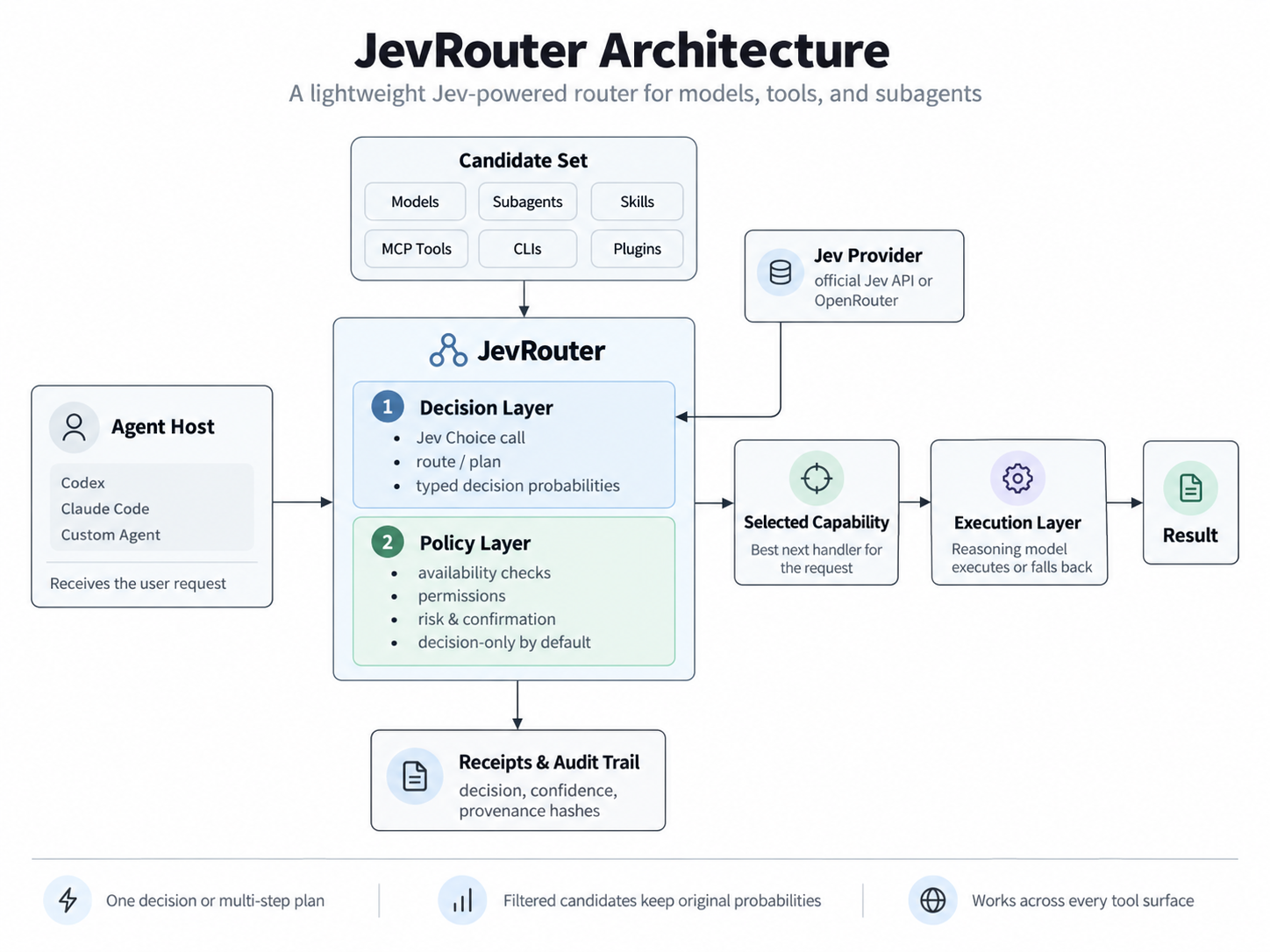
A command-line toolkit exposes Jev verification, classification, extraction, ranking, routing, compaction, and custom typed decisions for scripts, CI, and agent workflows.
Fish-style zsh history autosuggestions ranked by Jev (TypeSafe).
Route HTTP requests by meaning. A semantic router for Hono powered by Jev.
Video unavailable. Open the source below.
NewEveryone picks Jev confidence thresholds by vibes. 0.95? 0.5? I built jevcal. Give it your data and say "I need 99% accuracy". You get the exact threshold, how much Jev can handle, and how much still needs an LLM. Open source, one command.…
 New
5–10x faster browser operations: Jev clicks, Codex thinks and verifies. Built at EZCollegeApp.
Video unavailable. Open the source below.
Newmy mobile e2e testing library powered by @agent_device and AI sdk now supports Jev from @typesafeai Same test, same loop: Jev: 29s, $0.003 Haiku 4.5: 37s, $0.07
Claude Code plugin: trim long Bash output with TypeSafe Jev before the model sees it.
 New
ACP and MCP adapter that bridges TypeSafe Jev with any LLM — computer use and typed decisions alongside Codex, Claude, Grok, and OpenCode.
Classify first. Read selectively. A portable agent plugin and MCP tool for batch text classification.
 New
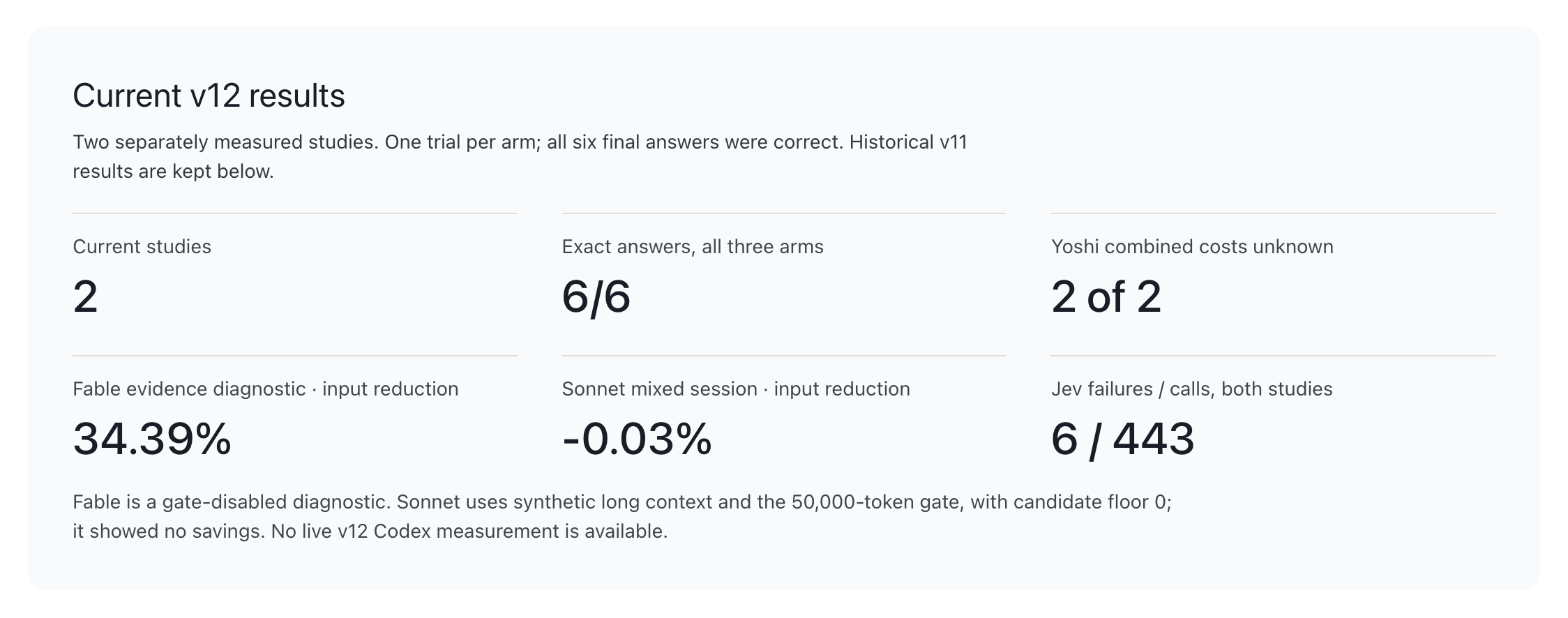
Context-pruning proxy for Claude Code and Codex: Jev judges which history is still needed, measured not claimed. POC here now, heading soon into
 New
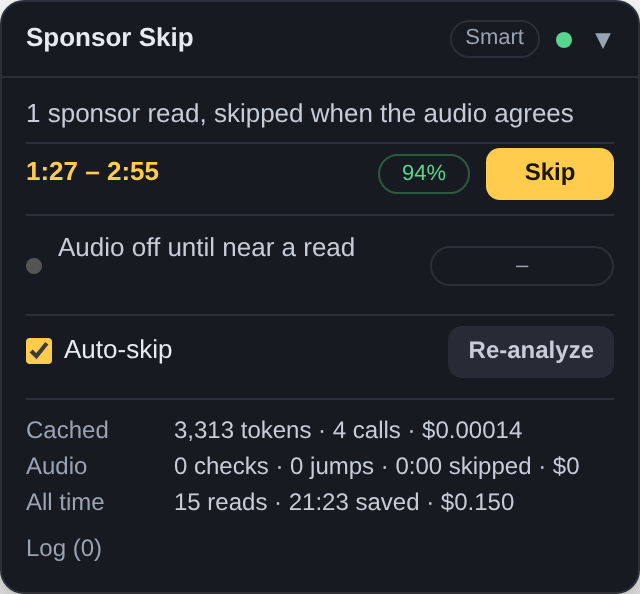
Detect youtube sponsor segment with live audio and transcript powered by Jev
A prose linter that combines local countable rules with Jev-powered judgment rules for writing checks.
Video unavailable. Open the source below.
NewVideo unavailable. Open the source below.
NewA Claude Code plugin experiments with pruning context instead of summarizing it.
 New
Filter, rank and classify PostgreSQL rows using natural-language conditions.
 New
"Work appears completed or recorded. Run /compact to save tokens."
 New
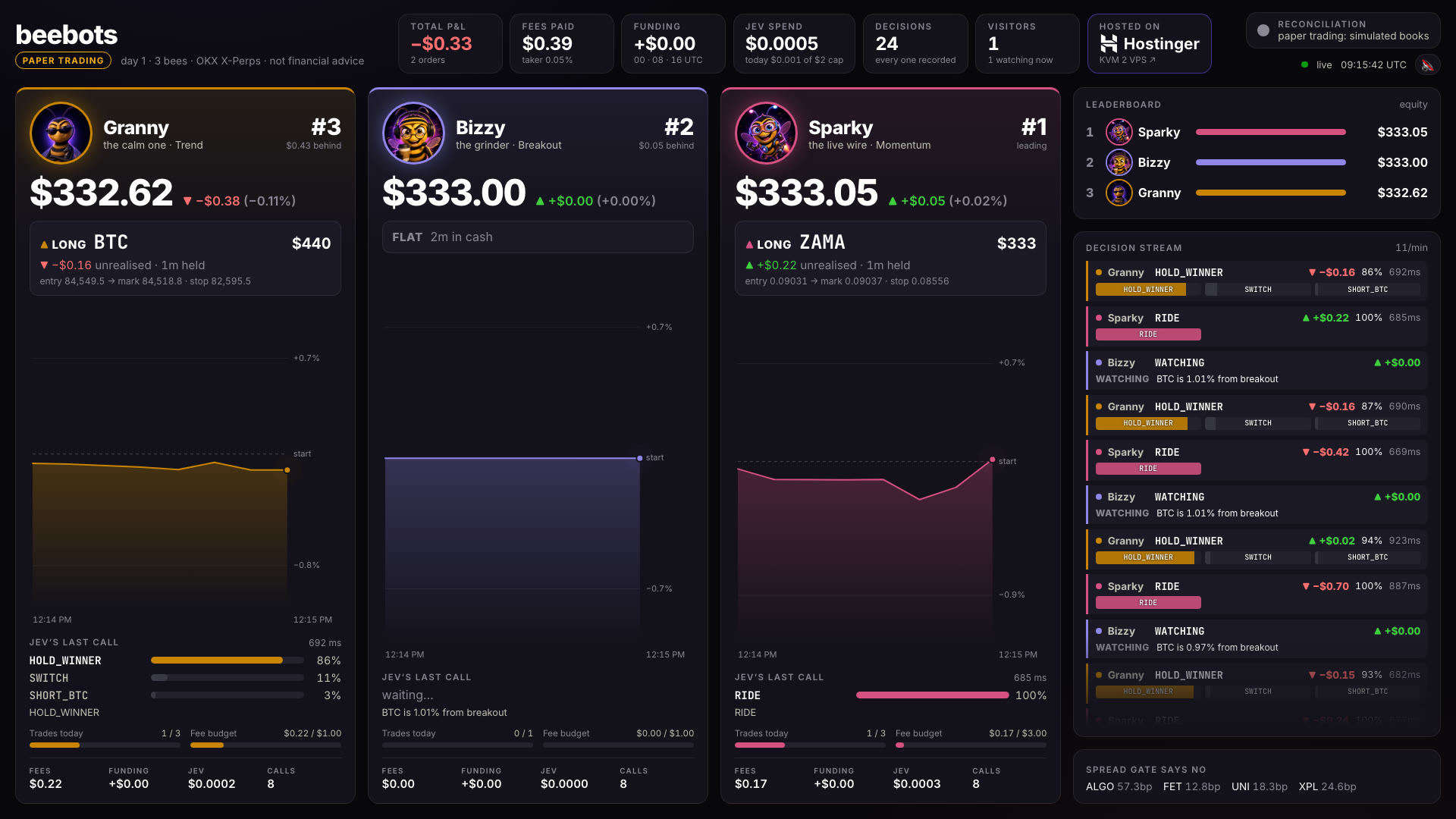
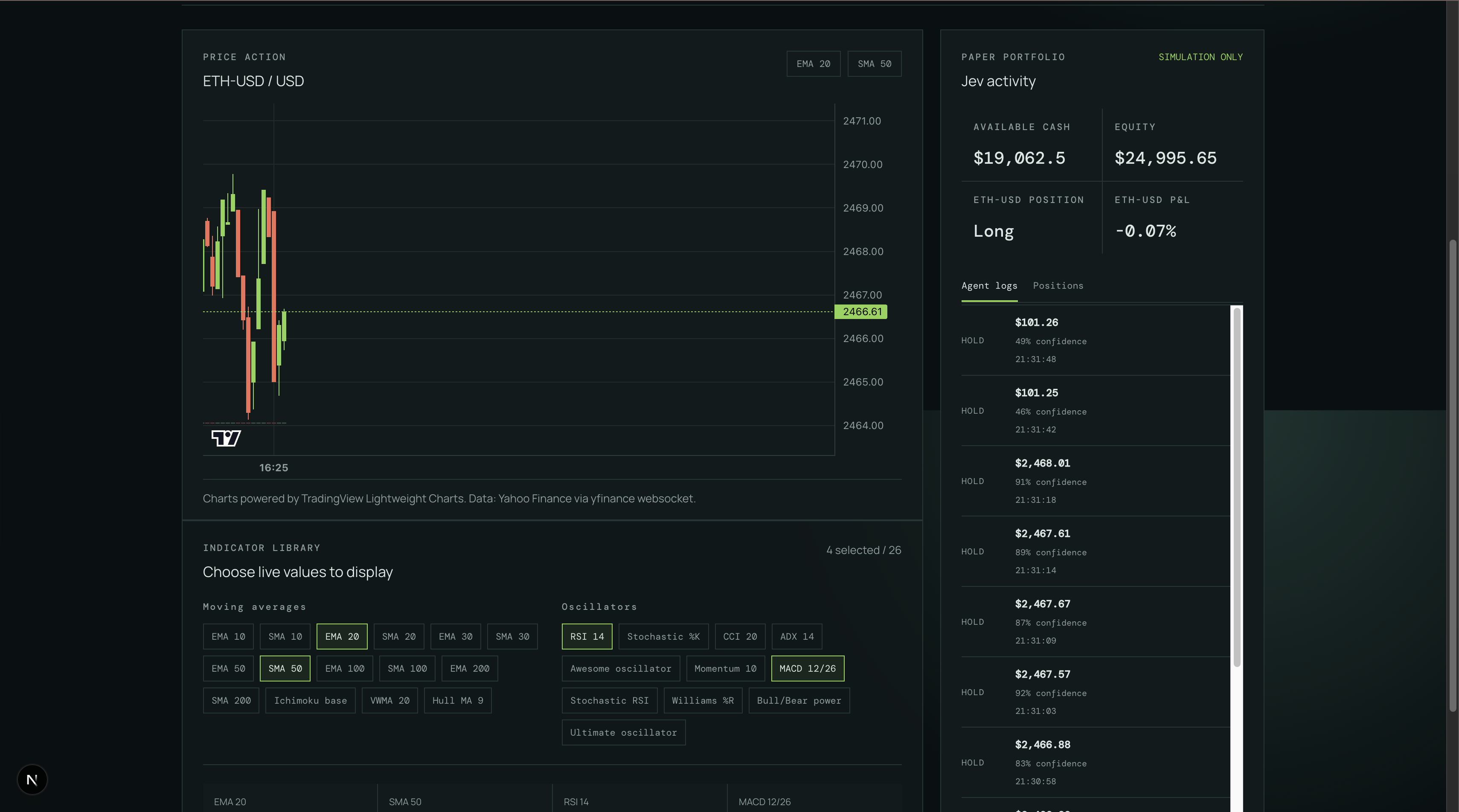
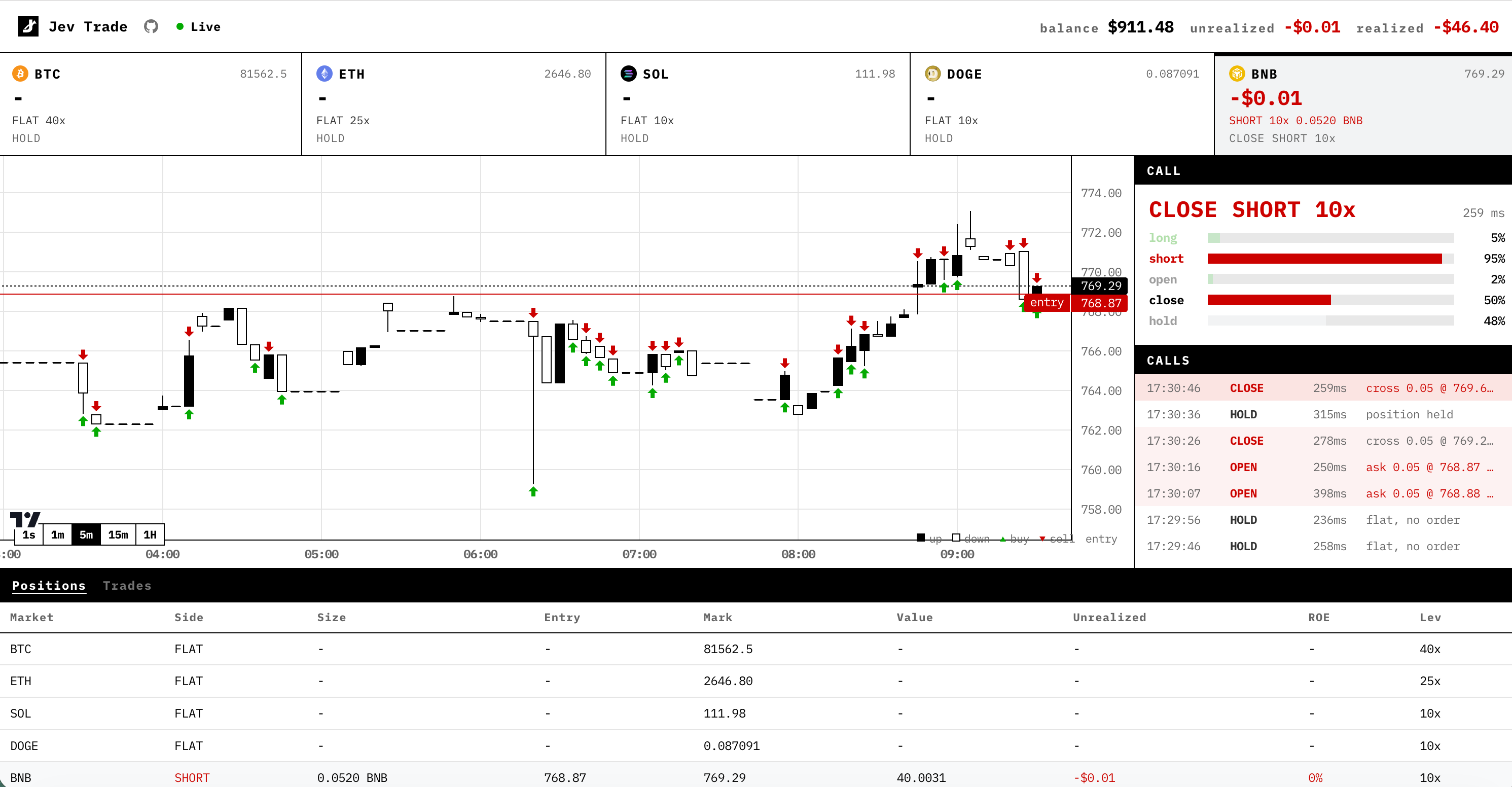
Trading bot with the all new TypeSafe AI's first system one model named as Jev.
 New
A web-search application uses Jev to choose sources, time ranges and search terms, then rank returned links and snippets.
🧹 Fun project: a Chrome extension that asks a tiny AI decision model (TypeSafe Jev) "is this DOM element an ad?" and pops it off the page. BYOK, no backend, not a real ad blocker.
Self-hosted, versioned skills library for AI agents. MCP, scoped clients, and optional Jev recommendations.
Interactive TypeScript coding CLI with typed routing, decision programs, and validated formal trees driven by Jev.
 New
Video unavailable. Open the source below.
NewA CLI recommends an agent or model from a task and the user's available AI subscriptions.
 New
A classifier produces small pixel-art images through repeated color choices.
A fast browser agent: Jev picks each action from what is on the page, an LLM reads and plans, and every claim in an answer cites a quote from the page.
A PostgreSQL extension exposes Jev categorical classification inside SQL.
An evaluation harness comparing Jev with LLM judges on the same recorded agent runs.
 New
Video unavailable. Open the source below.
NewA voice-browser demo combines speech input and Jev-selected actions in a rapid interaction loop.
A browser extension removes ads, cookie banners and other page clutter with reusable Jev rules.
An experimental supervisor uses Jev to assess and steer a coding agent.
A video tool scores each spoken sentence and renders an annotated 16:9 edit.
A web app asks Jev a set of parallel questions to decide whether a startup idea should be killed, fixed, or shipped.
Turn questions about household state into sensors and automation inputs.
Video unavailable. Open the source below.
NewAn Android agent navigates apps with a live studio and execution trace.
A music playground that turns a chosen style into sheet music, playback and MIDI.
 New
An experiment that makes a non-generative decision model assemble a chat reply one word at a time.
A command-line tool classifies Git commits by change type, bug fixes and security relevance.
Video unavailable. Open the source below.
NewA Rust CLI ranks installed agent skills against live session context with Jev, then applies abstention and local feedback around the typed result.
A Discord bot uses Jev to filter spam and scam links and escalate repeat offenses.
Video unavailable. Open the source below.
NewAn MCP tool supplies repeated software-quality measurements to coding agents.
A personal-assistant agent uses Jev to select one tool from a 100-tool catalog before each model step.
 New
Natural-language requests select and configure real UI components.
Video unavailable. Open the source below.
NewA browser agent selects actions from the current DOM and demonstrates flight search.
Video unavailable. Open the source below.
NewA trading experiment connects rapid decisions to an on-chain order book.
A Minecraft bot gathers materials and builds a supplied Canadian flag blueprint.
A staged code-review workflow follows Jev signals through focused checks and a local dashboard.
 New
A local router chooses a model tier for each Claude Code or Codex turn.
A macOS computer-use loop uses OCR and Jev to choose bounded actions.
A codebase-search tool uses ensembles of Jev-guided filesystem walkers.
A Pi extension gates tool calls, judges command output and exposes typed Jev questions.
Video unavailable. Open the source below.
New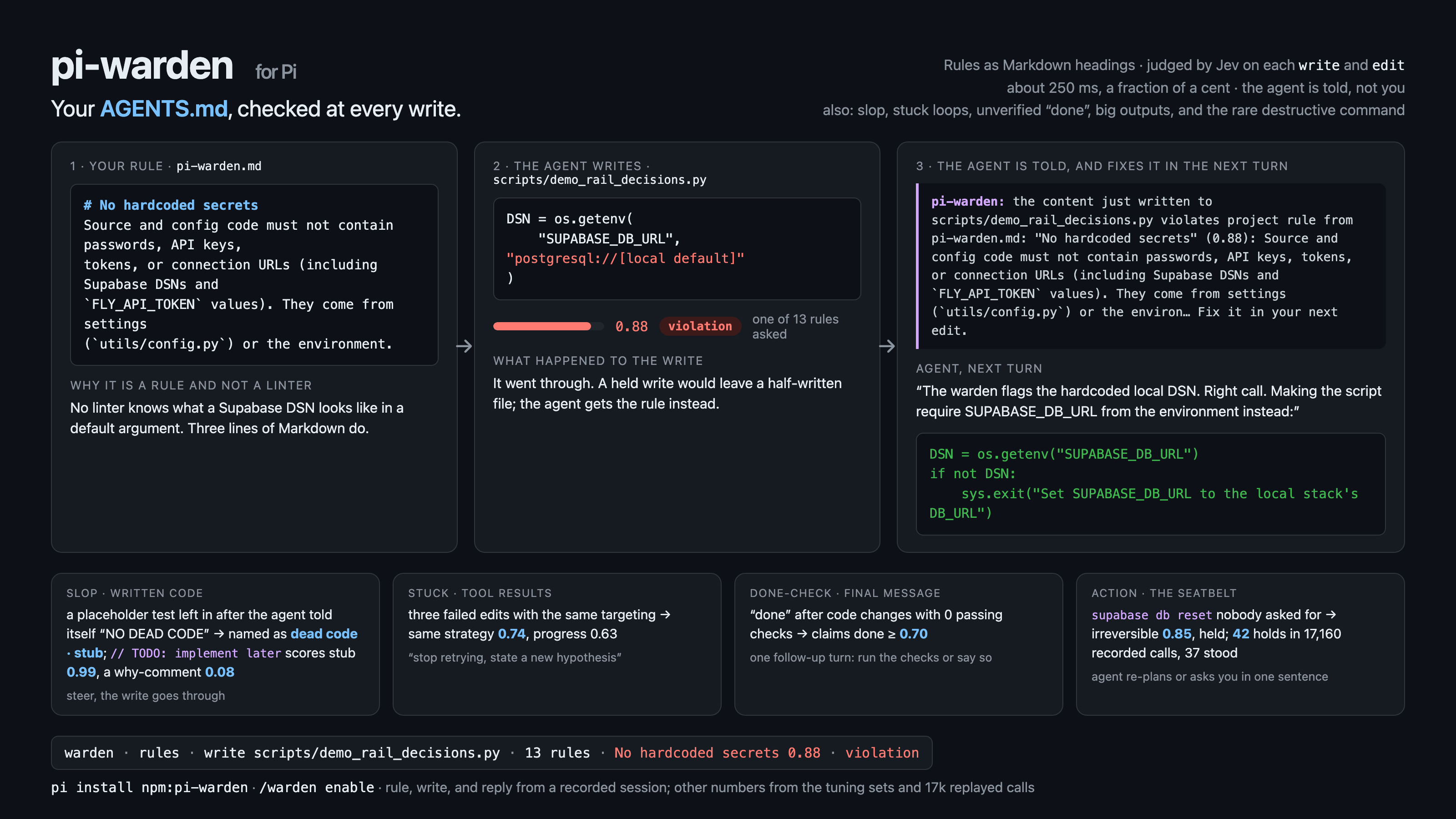 New
A Pi extension watches tool calls and agent progress for safety and completion problems.
A Claude Code hook that filters large tool results before they enter the agent's context.
 New
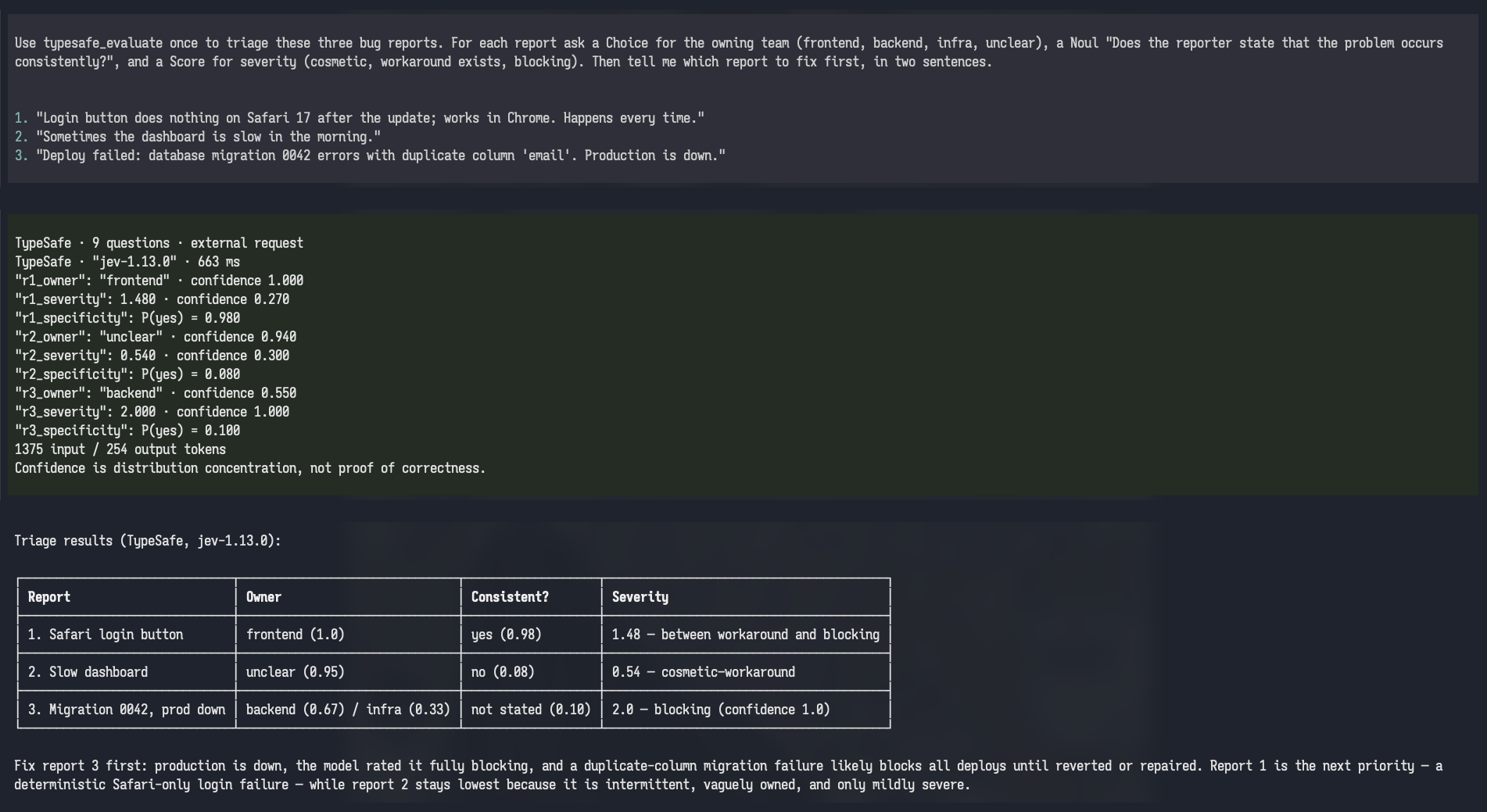
Pi extension with a Jev evaluation tool, terminal playground, and typed API for other extensions.
The Loki agent offers Jev as an optional typed-decision companion and session model router.
 New
Code quality and test coverage for coding agents: Jev scores each source file so the agent knows what to fix first.
An agent memory plugin that can ask Jev whether a new request needs a memory search.
 New
duet-agent uses a Jev-backed routing table to select models for agent work.
 New
A local memory system for AI agents with an optional Jev reranker for recalled notes.
A repository governance kernel can attach optional Jev trajectory observations to its assurance loop while retaining deterministic policy, interlocks and proof rules.
 New
An interactive terminal extension that can use Jev to select useful output from captured command logs.
OpenWork uses Jev as a typed verification judge for agent-produced work in its evaluation testkit.
 New
Smithers uses Jev checks and scores across repository and workflow automation.
 New
An open-source quantitative research platform that documents Jev-powered pre-trade decisions alongside market data, backtesting and execution tools.
 New
A Chrome control CLI with an optional Jev-driven semantic action loop.
A terminal tool exposes typed Boolean, Choice and Score evaluations with Jev as the default evaluation model.
NeuroLink exposes typed Jev decisions for routing, compaction, tool use, and retrieval planning.
A terminal coding agent uses Jev for typed turn, risk and progress judgments before its generative planning and tool loop.
Formanator can use Jev to select benefit and reimbursement categories for claims.
No projects matches these filters.