
jevlint
A linter that asks Jev to score how readable and well-structured each file is, then ranks what to refactor first.
Added to Jevfast
A linter that asks Jev to score how readable and well-structured each file is, then ranks what to refactor first.
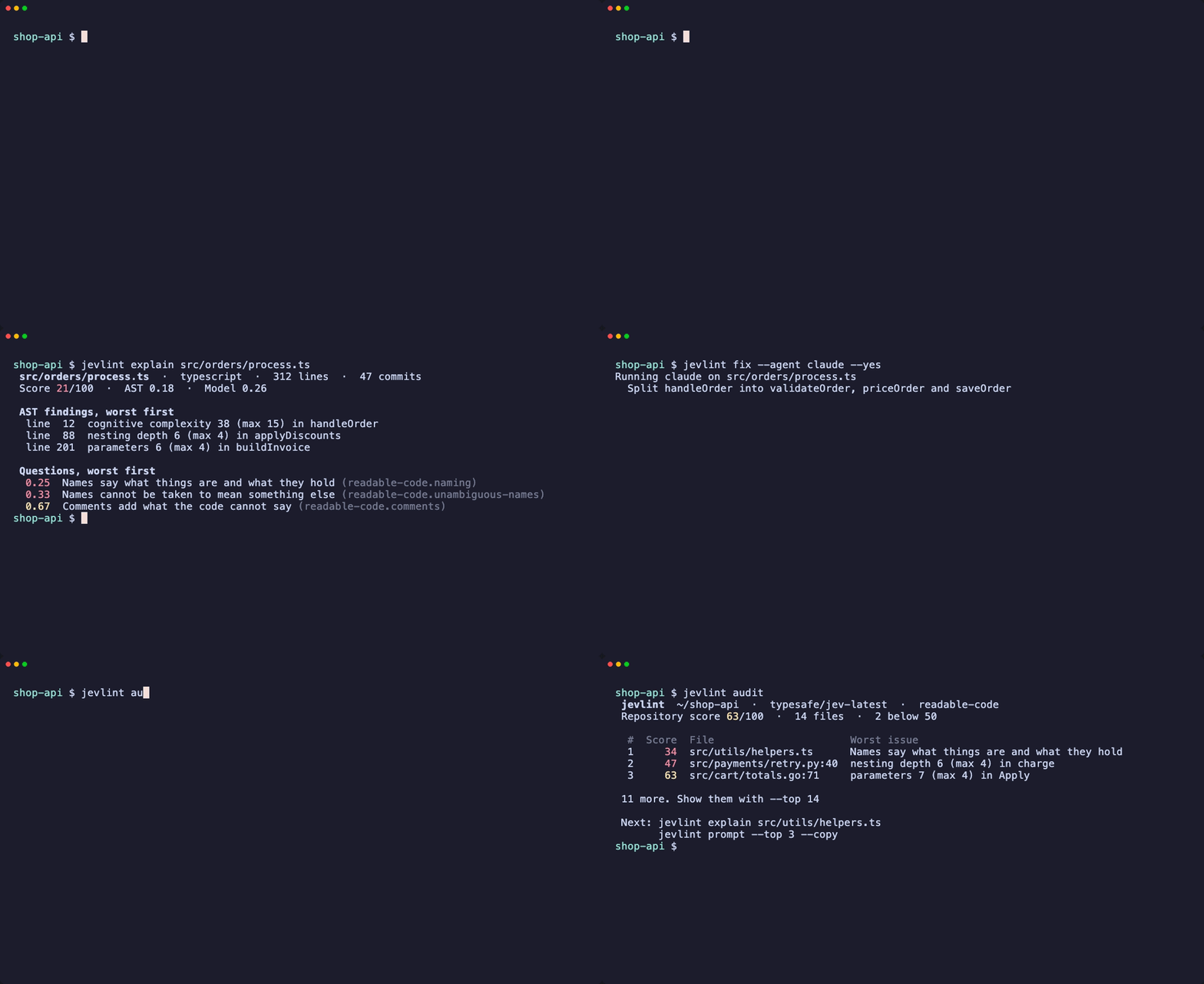
Each file's source text goes to Jev with the selected preset's questions: score questions such as naming, comments and control flow answered on four fixed levels, and one boolean question per matched code pattern. A returned level becomes a compliance value from 0 to 1 by dividing it by the highest level, each question carries a weight, and the weighted mean becomes the file score and, weighted by lines, the project score.
How much does each name in this file tell a reader about the value's content, unit or role, without reading the surrounding code?
The state is one source file. The request carries the preset questions keyed preset.question, each with its instruction and its ordered levels, and the level returned becomes a fraction of the highest level.
The CLI resolves the configured presets and reads each included file, leaving out pinned and excluded paths.
ast-grep finds each preset pattern match and keeps the first matches up to the configured rule limit.
The file text and the preset questions go out as one decision request; a cache keyed by content and question set answers unchanged files from disk.
Levels become compliance values, questions are weighted, and files are sorted messiest first with a priority that a log scale keeps comparable.
The report lists the top files with a suggested fix each, and the command exits non-zero when the project score is under the configured fail_under.
It turns whether a file is clean into a fixed set of score levels, so files can be ranked instead of described, and it caches answers by file content and question set so unchanged files cost nothing on a rerun.