
Jev Town
Simulate characters whose structured actions come from Jev and conversations come from a language model.
Added to Jevfast
Simulate characters whose structured actions come from Jev and conversations come from a language model.
JevTown has an optional action decider that sends an agent context as named state fields and several typed questions in one System One request. It asks Noul questions about whether the agent should seek a target or roam, then uses Choice questions to select a target, place, and idle duration. Application code composes these answers into an approach, wander, or idle action and maps chosen labels back to manifest IDs.
Decide whether it is a moment to go to somebody or something rather than stay where Alice is.
Source-owned fixture: Alice is a cautious millwright. Her state says the mill runs hot and she means to ask, and the world rule says nobody can leave town. The example manifest contains Bob, the Mill door, and the mill yard. This chart shows a subset of the request questions; the destination Choice is omitted.
Choose which available person or object is worth going to now.
Source-owned fixture: Alice is a cautious millwright. Her state says the mill runs hot and she means to ask, and the world rule says nobody can leave town. The example manifest contains Bob, the Mill door, and the mill yard. This chart shows a subset of the request questions; the destination Choice is omitted.
If not approaching somebody or something, decide whether walking somewhere else is better than staying put.
Source-owned fixture: Alice is a cautious millwright. Her state says the mill runs hot and she means to ask, and the world rule says nobody can leave town. The example manifest contains Bob, the Mill door, and the mill yard. This chart shows a subset of the request questions; the destination Choice is omitted.
If staying put, choose how long before it is worth looking around again.
Source-owned fixture: Alice is a cautious millwright. Her state says the mill runs hot and she means to ask, and the world rule says nobody can leave town. The example manifest contains Bob, the Mill door, and the mill yard. This chart shows a subset of the request questions; the destination Choice is omitted.
The app combines the active agent description and state with world rules, then gathers the current manifest of available targets and places.
The Jev decider creates Noul gates and Choice questions. It phrases target and place choices as readable actions and keeps internal IDs in a separate mapping.
The operations layer sends the generated state and questions to the separate System One provider and records the request and typed answers in the trace.
The decider interprets the Noul probabilities and Choice answers, applies local thresholds and idle policy, then maps the selected label back to a manifest target or place.
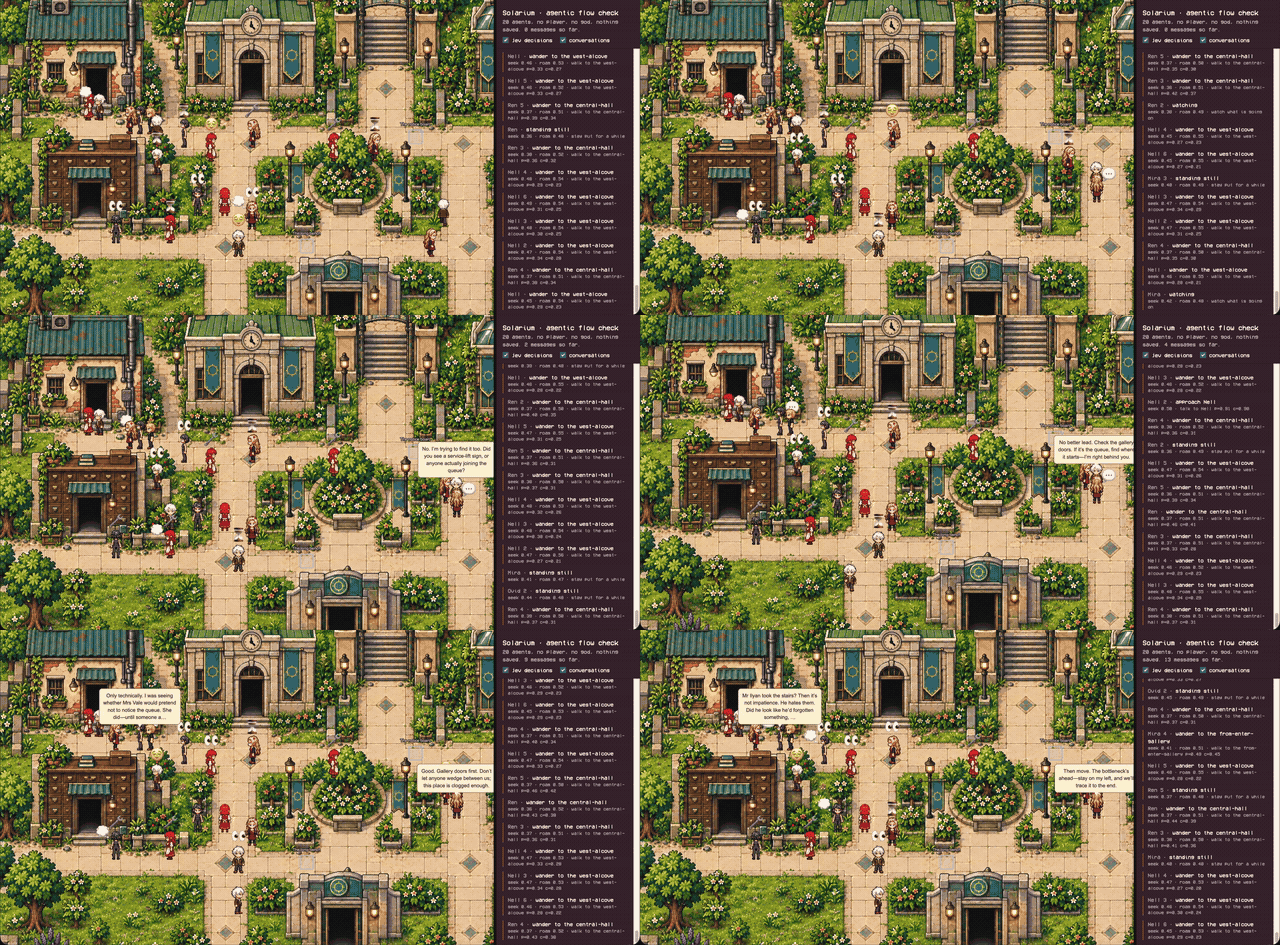
The operation sends an approach, wander, or idle input to the agent simulation. The Solarium demo renders the agents and their decision stream.
The decider makes the action set explicit before asking Jev. Choice labels describe the moves in ordinary language, while the app keeps internal IDs out of the model-facing options and maps the returned label back to the world manifest. A Solarium demo uses the same agent loop on a scene-backed world.