
 New
NewQuantStudio
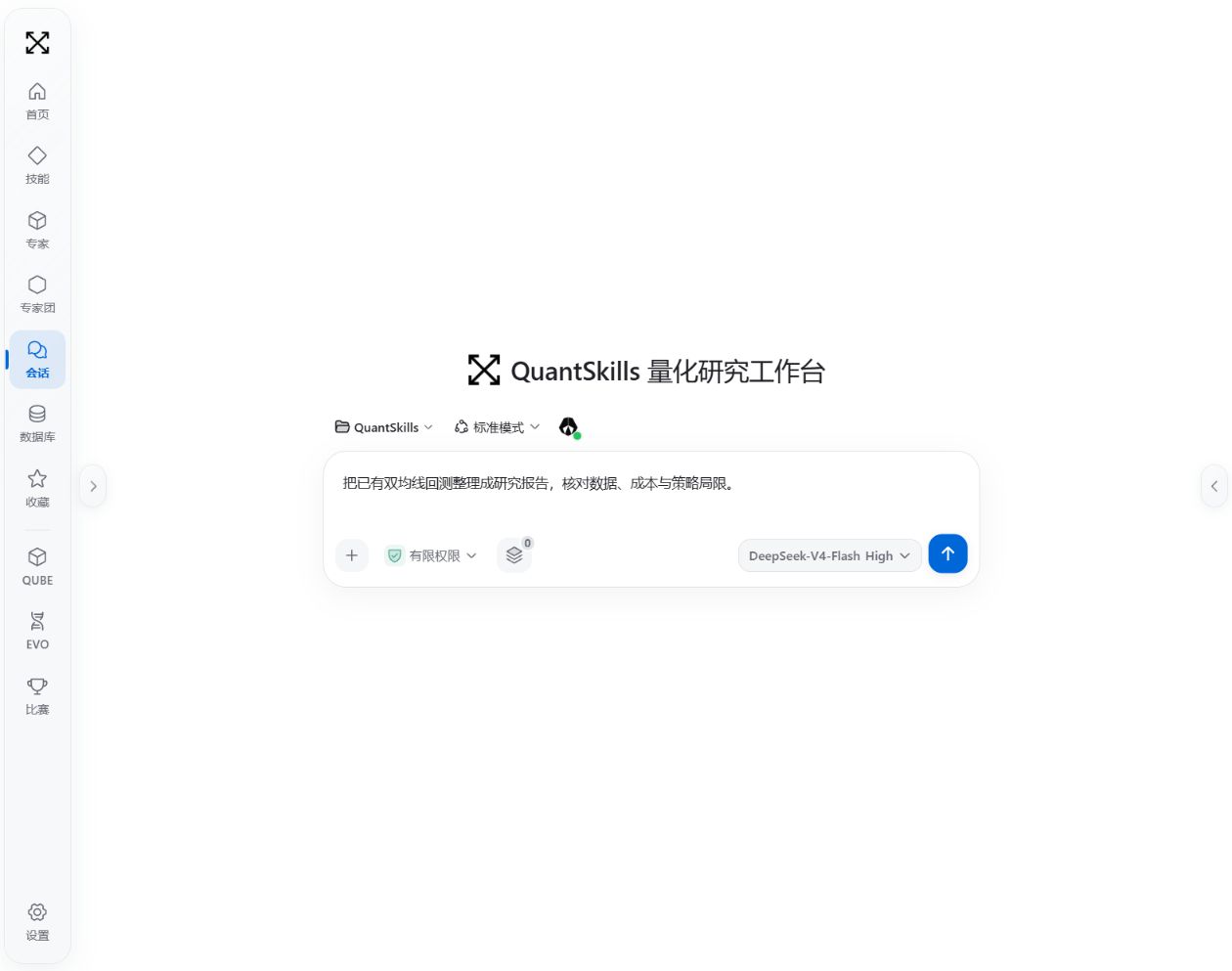
A research and trading workbench with a Jev-powered futures monitoring and proposal-evaluation path connected to a simulated contest account.
Added to Jevfast
NewA research and trading workbench with a Jev-powered futures monitoring and proposal-evaluation path connected to a simulated contest account.
The host supplies a bounded proposal, dated market evidence, and a fresh account snapshot. Jev classifies evidence sufficiency, scores support on the source-defined four-step scale, and flags material risk or missing inputs. It does not itself submit orders.
Are the supplied dated market observations sufficient to evaluate this proposal?
User-provided futures proposal and dated market evidence combined with a fresh account, positions and open orders snapshot. Each evaluation has observation timestamps.
How strongly does the supplied evidence support the proposed action under the stated constraints?
User-provided futures proposal and dated market evidence combined with a fresh account, positions and open orders snapshot. Each evaluation has observation timestamps.
Does the proposal or account snapshot reveal a material risk concern or missing required input?
User-provided futures proposal and dated market evidence combined with a fresh account, positions and open orders snapshot. Each evaluation has observation timestamps.
The user connects a simulated contest account, selects contracts, and sets constraints and execution mode.
The host obtains market observations and a fresh account, position, and open-order snapshot.
Jev assesses evidence sufficiency, support, and risk against the supplied constraints.
The user reviews a plan or uses the configured execution path; submitted orders and fills are tracked separately.
When the JEV monitor is enabled, the workbench repeats observation and evaluation during its active run; the precise cadence is not established in this draft.
The explicit evidence-quality and risk questions separate “can evaluate this?” from “does evidence support the proposal?”, while the host retains execution control and records order acknowledgments separately from fills.