
 New
NewJev Chat Assistant
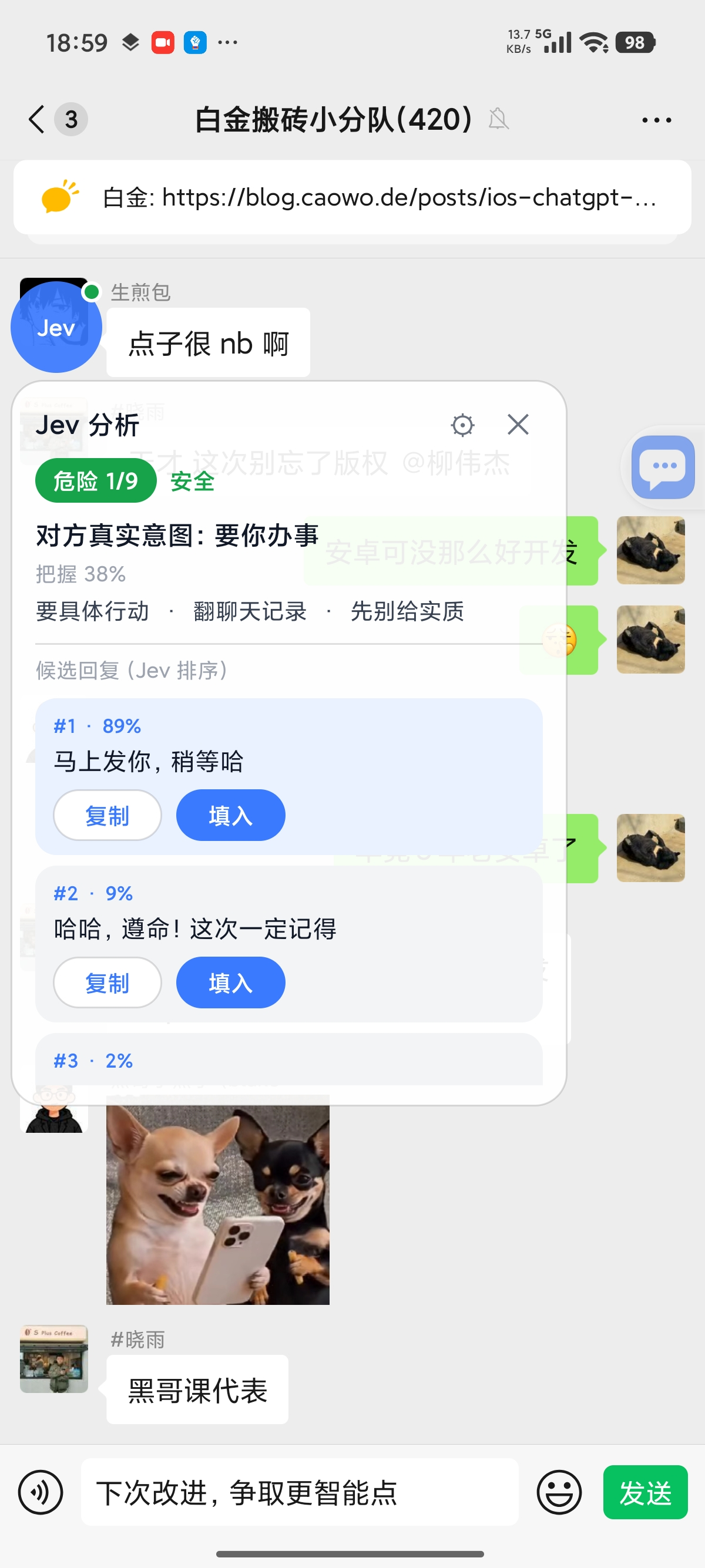
An Android conversation assistant reads the visible chat, asks Jev for structured judgments, drafts reply candidates with a text model, then uses Jev to rank them for the person to review.
Added to Jevfast
NewAn Android conversation assistant reads the visible chat, asks Jev for structured judgments, drafts reply candidates with a text model, then uses Jev to rank them for the person to review.
The seven-question analysis informs the overlay. Separately, a text model drafts replies and a Jev Choice ranks three candidates; candidates are shown for user selection, and sending remains manual.
What is the other person's true intent in the latest message, given the full conversation? Prefer tone and context over surface wording. If they are checking whether you remember something or still care, choose confirm_you_care even if the words look like a request to 'say it' or to do something. If they already accepted and closed the matter peacefully, choose close_topic. Ending the relationship, deleting you, or 'don't talk to me' is vent_anger, never close_topic.
State contains `chat.relationship`, last 10 `chat.messages` with `from` and `text`, and `chat.latest_from`.
An app adapter converts the current chat window into a title and ordered speaker/message list.
Jev evaluates the conversation questions in one call; a generative model drafts three candidate replies; a separate Jev Choice ranks those candidates.
Jev ranks candidates and the overlay displays the analysis and choices.
The user may fill or copy a candidate; the user sends it manually.
It combines structured interpretation with generated replies but leaves the final message and send action under human control.